Shades of Green: 100+ Green Color Names with HEX & RGB Codes
Choosing the right shades of green for your design project is harder than it looks. There is a massive difference between Emerald and Sage, between Forest Green and Lime, between Olive and Mint. Each one sends a completely different message to your audience. Yet most designers just call it “green” and move on.
That vagueness costs real money in professional work. A wellness brand that needed Sage gets Seafoam. A luxury client who wanted Emerald gets Kelly Green. The client is unhappy, and you are doing free revisions that could have been avoided with a proper color reference.
This guide maps out 100+ shades of green with precise HEX and RGB codes – organized into categories so you can find exactly what you need fast. If you love color guides like this, also check out our complete breakdowns of Shades of Blue and Shades of Red.
Must Reads on CGfrog:
- Shades of Blue: 100+ Blue Color Names with HEX & RGB Codes
- Shades of Red: 100+ Red Color Names with HEX & RGB Codes
- 7 Colors That Could Get You Sued in Branding
- 15 Best Color Combinations for Logo Design
- The Psychology of Color in Design
Why Green Is the Most Versatile Color in Design
Green covers more of the visible spectrum than any other color. That is not just a trivia fact – it means the human eye can distinguish more shades of green than any other hue. Which is exactly why getting the right shade matters so much. Two greens that look similar in your head can feel completely different to your audience.
In branding, green communicates nature, health, growth, and sustainability – which is why it dominates everything from food packaging to finance to tech. But the specific shade does all the heavy lifting:
- Emerald Green – luxury, sophistication, jewel-toned elegance
- Sage Green – wellness, calm, natural, organic
- Forest Green – outdoors, adventure, rugged authenticity
- Lime Green – energy, youth, boldness
- Olive Green – military, vintage, earthy, understated
- Mint Green – fresh, clean, approachable, retro
Using the wrong shade of green is one of the most common mistakes in brand design. This guide gives you the exact codes so you never have to guess. And if you need a professional eye on your brand colors, CGfrog’s design team has been building brand identities for 14 years.
Level Up Your Green Palettes with AI Tools
Once you have your ideal green shade from this guide, AI palette tools can help you build a full color system around it. Tools like Coolors and Adobe Color let you paste any HEX code and instantly generate complementary, analogous, or triadic palettes. For a full roundup of AI tools that help with color and design work, see our guide to AI tools for graphic designers.
1. Most Popular Shades of Green
The greens every designer should know by name. These are the most recognized, most searched, and most used shades across branding, web design, and print.
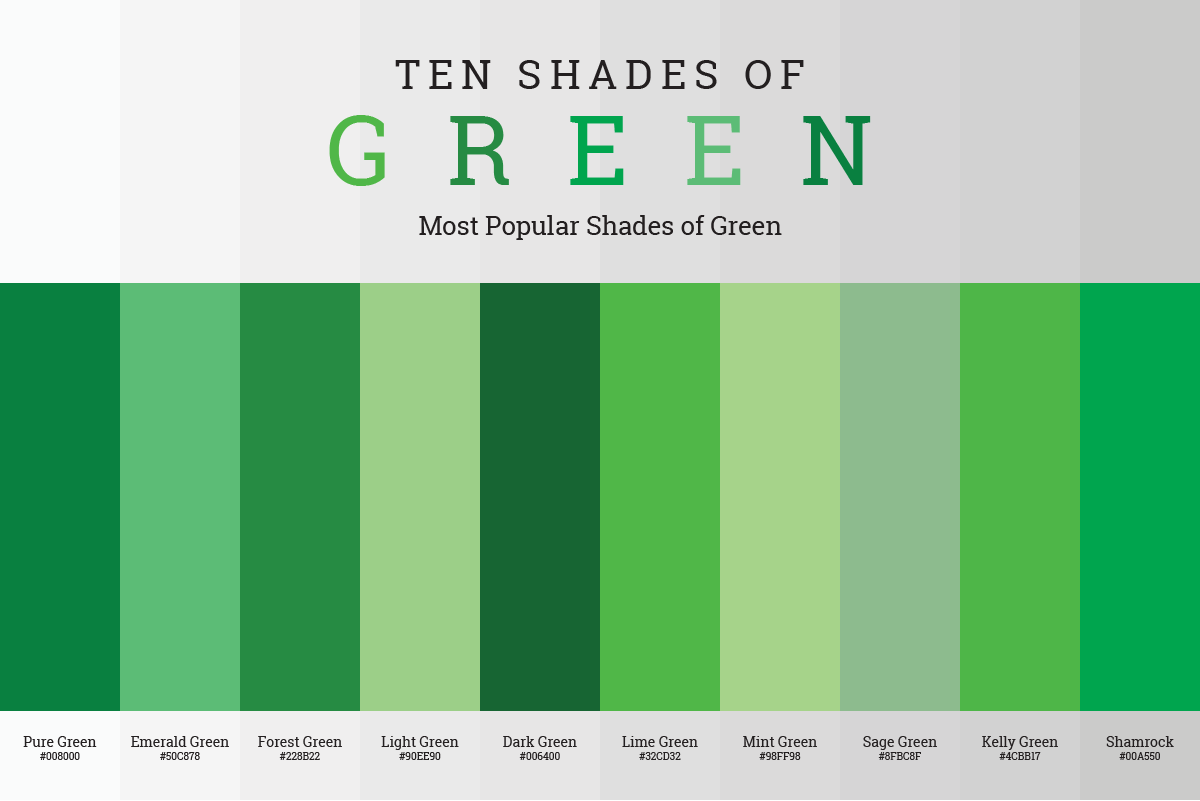
HEX & RGB Codes – Most Popular Greens
Pure Green #008000 Emerald Green #50C878 Forest Green #228B22 Light Green #90EE90 Dark Green #006400
Lime Green #32CD32 Mint Green #98FF98 Sage Green #8FBC8F Kelly Green #4CBB17 Shamrock Green #00A550
2. Deep and Dark Green Shades
Rich, deep greens that communicate authority, luxury, and depth. Perfect for premium brands, legal and financial services, luxury packaging, and editorial design.
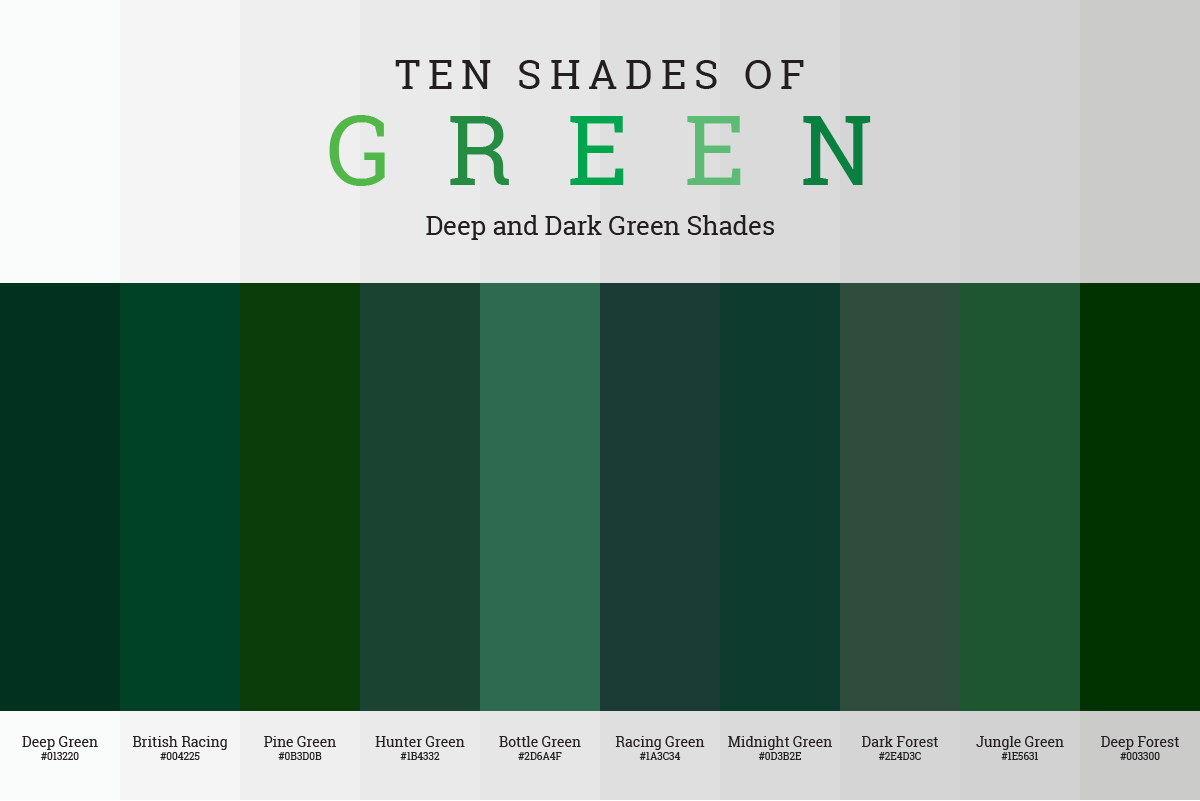
HEX & RGB Codes – Deep and Dark Greens
Deep Green #013220 British Racing Green #004225 Pine Green Dark #0B3D0B Hunter Green #1B4332 Bottle Green #2D6A4F
Racing Green #1A3C34 Midnight Green #0D3B2E Dark Forest #2E4D3C Jungle Green Dark #1E5631 Deep Forest #003300
3. Bright and Vibrant Green Shades
High-energy greens for tech brands, youth-focused products, sports, and anything that needs to stand out. These greens demand attention and communicate action.
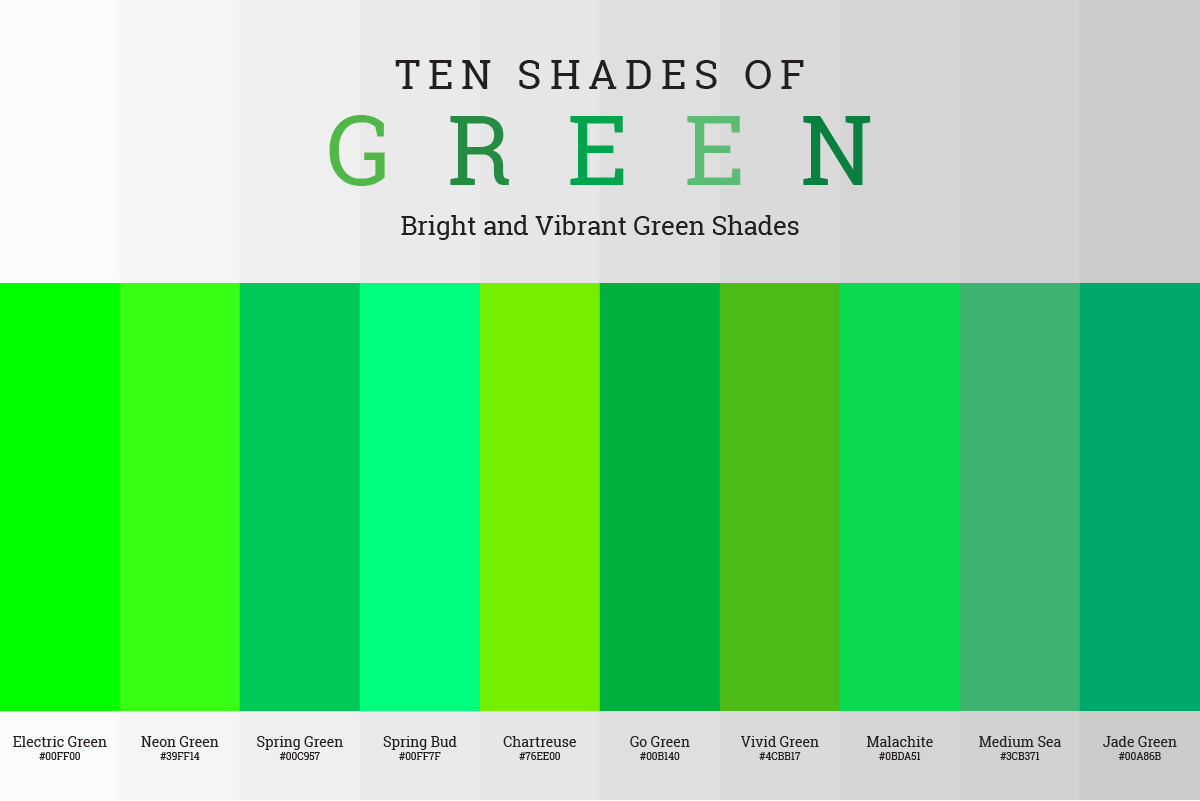
HEX & RGB Codes – Bright and Vibrant Greens
Electric Green #00FF00 Neon Green #39FF14 Spring Green #00C957 Spring Bud #00FF7F Chartreuse #76EE00
Go Green #00B140 Vivid Green #4CBB17 Malachite #0BDA51 Medium Sea Green #3CB371 Jade Green #00A86B
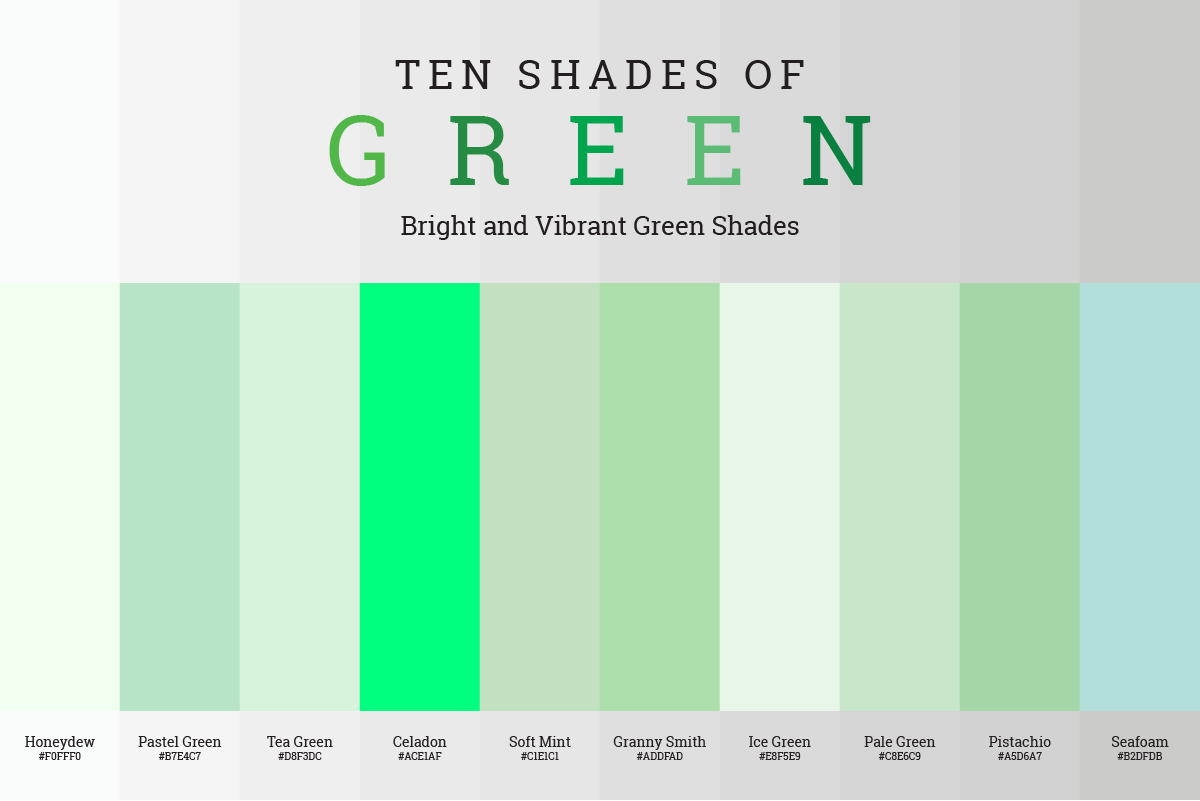
4. Pastel and Soft Green Shades
Gentle, airy greens for wellness brands, baby products, skincare, and anything that needs to feel calm, natural, and approachable. These greens photograph beautifully.
5. Nature and Earth Green Tones
Greens inspired by actual nature – leaves, grass, moss, and trees. These feel authentic and grounded, making them ideal for organic food brands, environmental organizations, and outdoor companies.
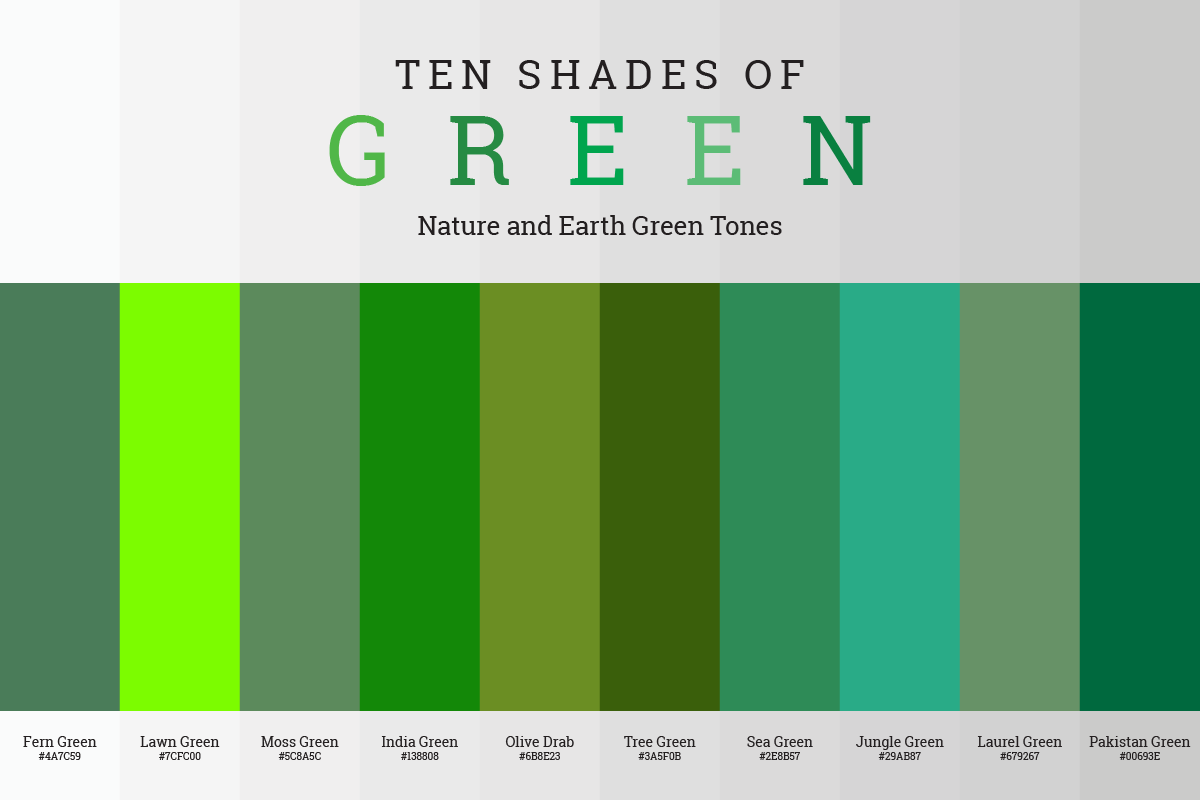
HEX & RGB Codes – Nature and Earth Greens
Fern Green #4A7C59 Lawn Green #7CFC00 Moss Green #5C8A5C India Green #138808 Olive Drab #6B8E23
Tree Green #3A5F0B Sea Green #2E8B57 Jungle Green #29AB87 Laurel Green #679267 Pakistan Green #00693E
6. Neon and Electric Shades of Green
Futuristic, high-impact greens for gaming, streetwear, nightlife, and cyberpunk aesthetics. These are the greens that glow on dark backgrounds and stop people mid-scroll.
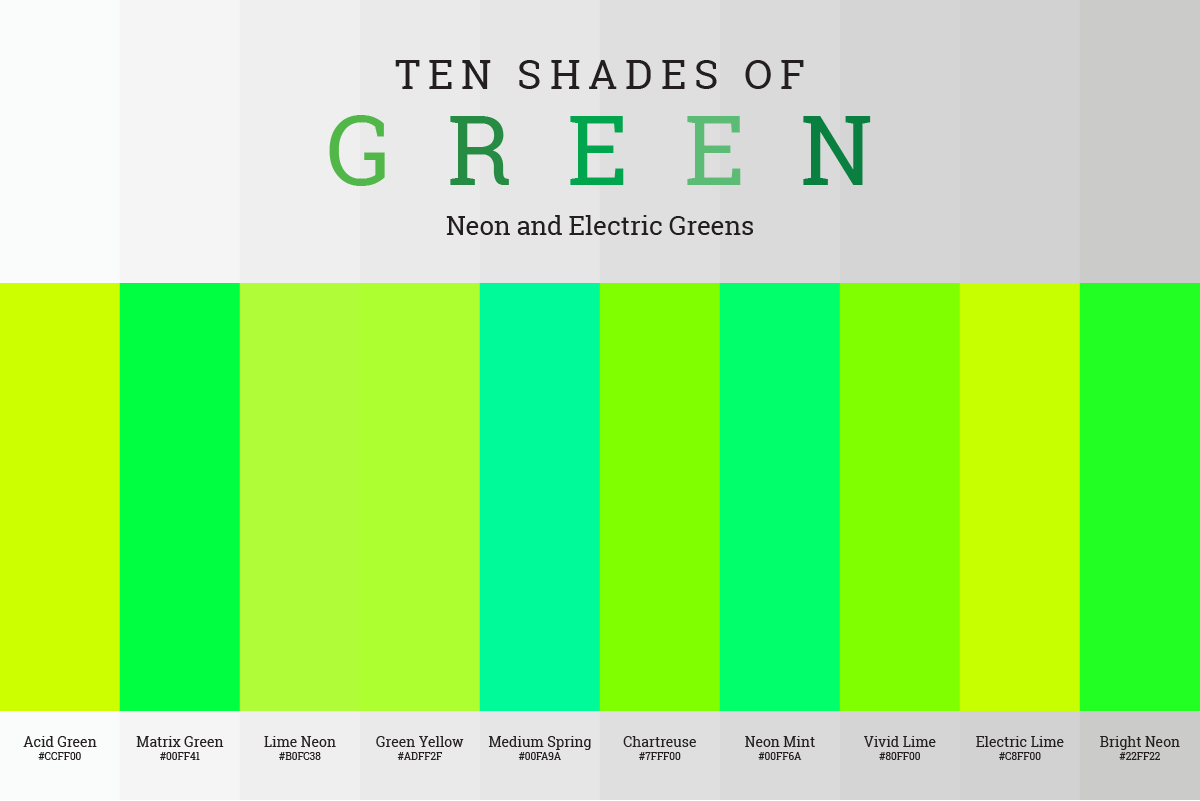
HEX & RGB Codes – Neon and Electric Greens
Acid Green #CCFF00 Matrix Green #00FF41 Lime Neon #B0FC38 Green Yellow #ADFF2F Medium Spring #00FA9A
Chartreuse Neon #7FFF00 Neon Mint #00FF6A Vivid Lime #80FF00 Electric Lime #C8FF00 Bright Neon #22FF22
7. Olive and Muted Green Tones
Sophisticated, understated greens that work beautifully in fashion, interior design, and premium editorial. These are the greens of military heritage, vintage aesthetics, and grown-up design.
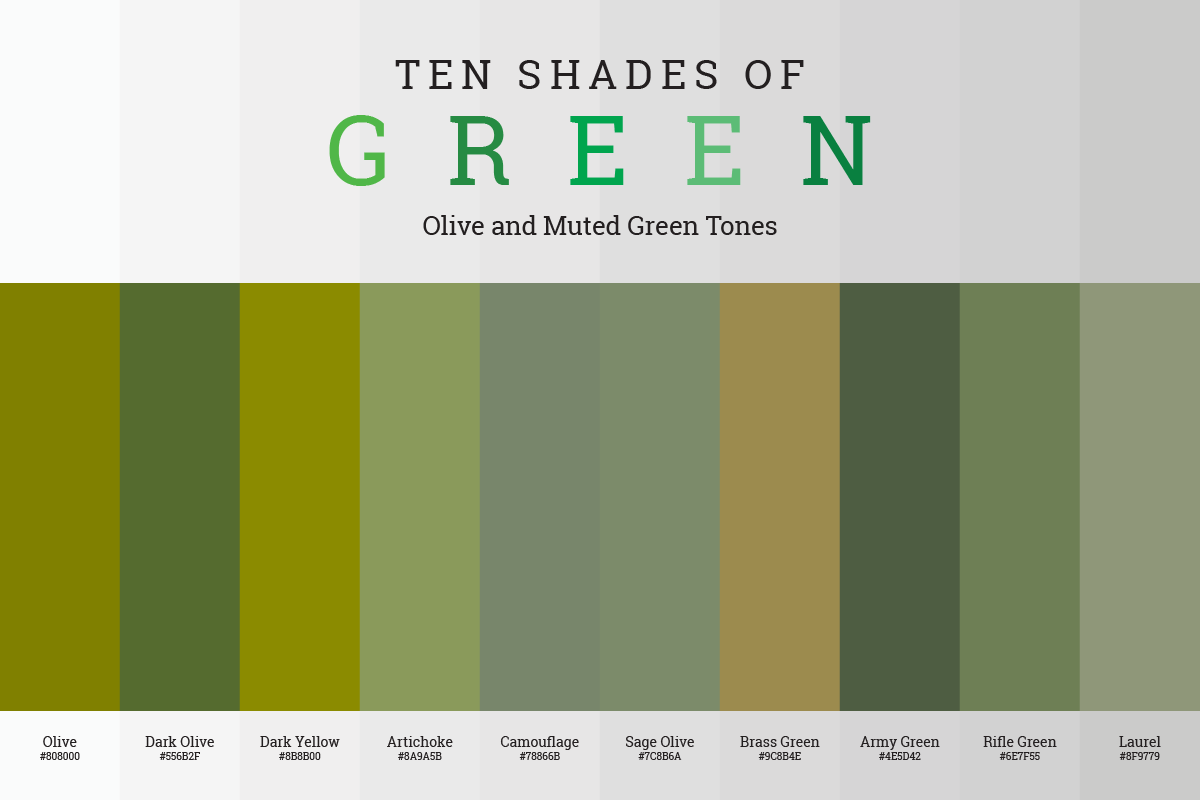
HEX & RGB Codes – Olive and Muted Greens
Olive #808000 Dark Olive Green #556B2F Dark Yellow Green #8B8B00 Artichoke #8A9A5B Camouflage Green #78866B
Sage Olive #7C8B6A Brass Green #9C8B4E Army Green #4E5D4E Rifle Green #6E7F55 Laurel #8F9779
8. Vintage and Retro Green Shades
Muted, nostalgic greens that feel like mid-century kitchens, old botanical prints, and faded wallpaper. Perfect for vintage branding, retro packaging, and editorial aesthetics.
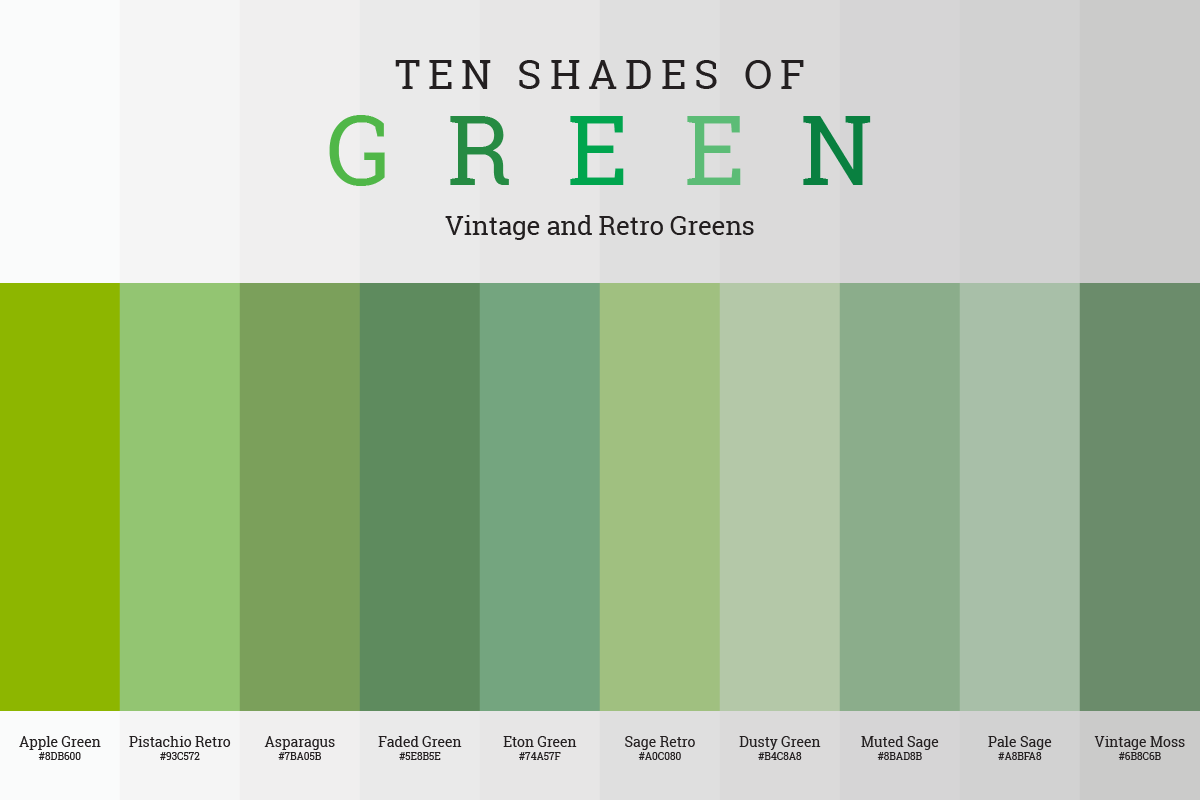
HEX & RGB Codes – Vintage and Retro Greens
Apple Green #8DB600 Pistachio Retro #93C572 Asparagus #7BA05B Faded Green #5E8B5E Eton Green #74A57F
Sage Retro #A0C080 Dusty Green #B4C8A8 Muted Sage #8BAD8B Pale Sage #A8BFA8 Vintage Moss #6B8C6B
9. Rare and Exotic Green Color Hues
These are the greens most designers have never heard of but should. From art history, gemstones, and global color traditions – these shades add instant sophistication to any palette.
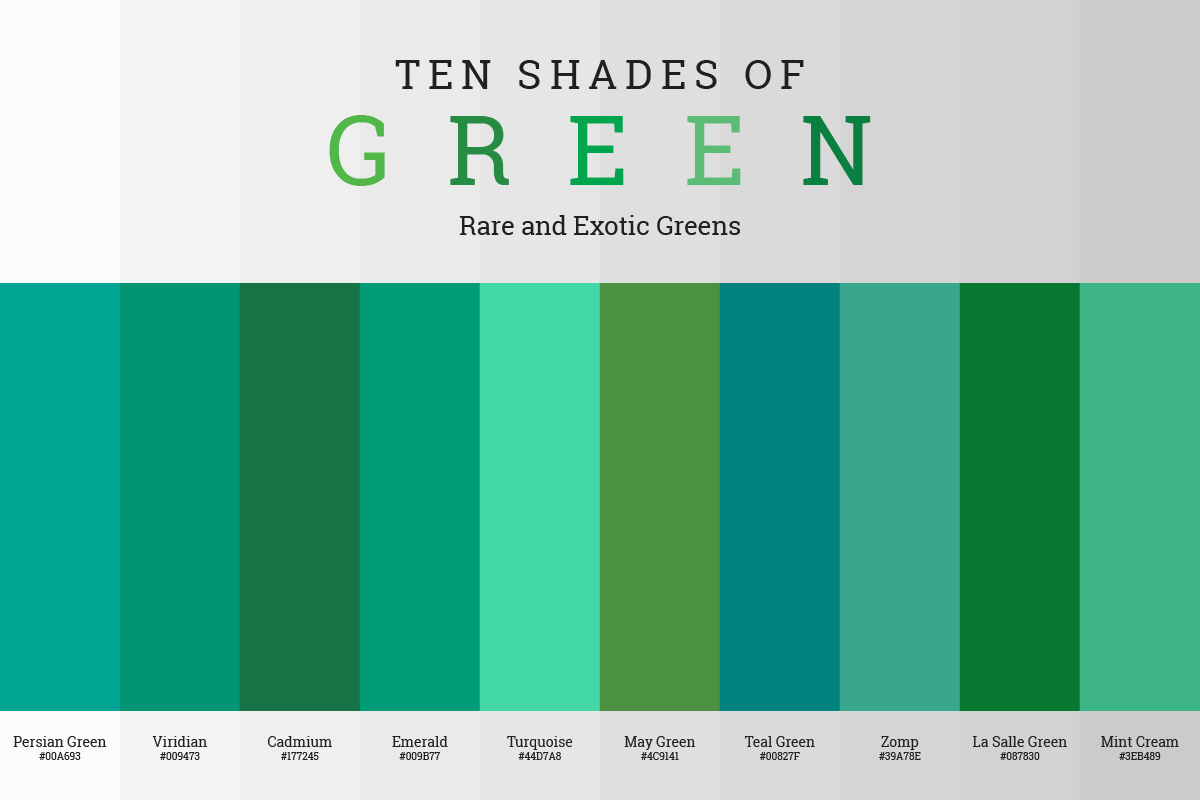
HEX & RGB Codes – Rare and Exotic Greens
Persian Green #00A693 Viridian #009473 Cadmium Green #177245 Emerald Pantone #009B77 Turquoise Green #44D7A8
May Green #4C9141 Teal Green #00827F Zomp #39A78E La Salle Green #087830 Mint Cream #3EB489
10. Final Master Green Palette
The complete supplementary list – rounding out your green toolkit with utility shades, brand greens, and designer favorites.
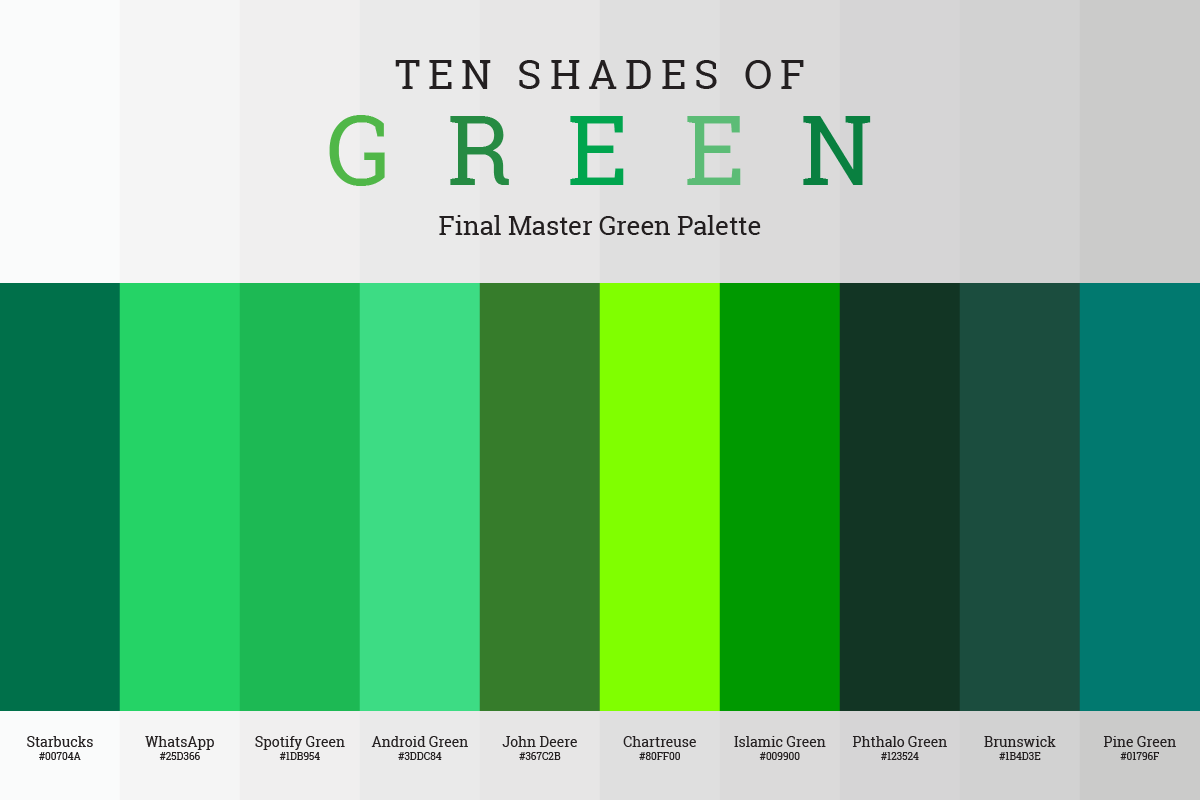
HEX Codes – Complete Master List
Starbucks Green #00704A WhatsApp Green #25D366 Spotify Green #1DB954 Android Green #3DDC84 John Deere Green #367C2B
Chartreuse Web #80FF00 Harlequin #3FFF00 Lincoln Green #195905 Islamic Green #009900 Phthalo Green #123524
Hooker Green #49796B Reseda Green #74856B Kombu Green #354230 Castleton Green #00563F Dartmouth Green #00703C
Sacramento Green #043927 Feldgrau #4D5D53 Myrtle Green #317873 Pine Green #01796F Brunswick Green #1B4D3E
Recommended Resources
Working on a branding or design project that needs the perfect green palette? Envato Elements has thousands of brand identity templates, color palettes, and mockups you can customize with these exact HEX codes.
For custom logo and brand identity work built around your exact color choices, CGfrog’s design team has been creating brand identities for over 14 years – with packages starting from $39.99.
Need individual design assets? Creative Market has thousands of green-themed templates, patterns, and illustrations from independent designers.
Free Download: Get all 100+ shades of green as a printable PDF color chart – perfect for your design desk.
Download Free Green Color Chart PDF
FAQ
The human eye can perceive more shades of green than any other color – scientists estimate we can distinguish up to 10 million color variations, and green occupies the widest band of that spectrum. This guide covers 100+ of the most useful shades for designers, from the darkest Hunter Green to the lightest Honeydew, organized into practical categories for real design work.
Emerald Green (#50C878) is consistently one of the most used greens in luxury branding and fashion. Sage Green (#8FBC8F) dominates wellness and lifestyle brands. For tech and apps, Spotify Green (#1DB954) and similar bright greens have become iconic. In sustainability branding, Forest Green (#228B22) remains the go-to choice.
The most commonly used Emerald Green in digital design is #50C878 (RGB: 80, 200, 120). The official Pantone Emerald – named Color of the Year in 2013 – is closer to #009B77. For a deeper, more saturated emerald used in luxury branding, #046307 is a popular choice. The right shade depends on whether you need a bright, mid-tone, or deep emerald.
Sage Green (#8FBC8F) is a soft, grey-toned green – cool, muted, and associated with wellness, calm, and natural living. It has become hugely popular in interior design and lifestyle branding. Olive Green (#808000) is a yellow-toned, earthy green – warmer, more muted, and associated with military, vintage, and rugged aesthetics. Sage reads as “modern and minimal.” Olive reads as “heritage and grounded.”
The most credible greens for sustainability branding are mid-tone to dark natural greens rather than bright or neon greens, which can feel synthetic. Forest Green (#228B22), Hunter Green (#1B4332), and Fern Green (#4A7C59) all read as genuinely natural. Avoid lime greens and chartreuse for this use case – they undermine the authenticity of the message.
For primary action buttons and UI elements, Go Green (#00B140) and Jade Green (#00A86B) perform well for CTAs. For backgrounds and surfaces, Honeydew (#F0FFF0) and Ice Green (#E8F5E9) add subtle warmth without overpowering the content. For dark mode interfaces, Hunter Green (#1B4332) and Midnight Green (#0D3B2E) create a rich, premium feel.
Green is universally associated with freshness, growth, and nature – associations built over thousands of years of human evolution. In food branding, green signals freshness and health almost automatically. In health and wellness branding, it communicates natural ingredients and organic processes. Specific shades matter though: bright greens signal energy and freshness, while muted sage and forest greens communicate calm and trust.
Don't Miss
Shades of Blue: 100+ Blue Color Names with HEX & RGB Codes

Color Psychology in Film: How Directors Use Color to Tell Stories
It’s Bubblegum, Not ‘Light Pink’: The Ultimate Color Thesaurus for Every Imagineable Shade
15 Best Color Combinations for Logo Design (With HEX Codes & Examples)
300+ Trending Color Gradients For Your Design Projects