How to Design a Logo: Know All About the Logo Design Process

How to Design a Logo: Most people think logo design is about making something that looks nice. After working on logo projects for over 14 years at CGfrog, the honest truth is that good-looking and good-working are two completely different things. A logo can be visually beautiful and still fail completely at its job. And a deceptively simple logo can carry a brand for decades.
This guide walks you through the complete process of how to design a logo — not just the theory, but the actual decisions you make at each stage, why they matter, and what separates a logo that lasts from one that gets redesigned in two years.
To design a logo, start by defining the brand’s personality and target audience before touching any design tool. Research competitors to find visual white space. Choose the right logo type, select typography and colors that match the brand’s message, sketch multiple concepts, then execute digitally in vector format. Always test the final logo in black and white, at small sizes, and on real mockups before delivery.
In this post, I’ll be walking through the entire process of how to design a logo from start to finish. So, if you want to learn how to make a logo properly, go through this post and enjoy.
More Logo Design Guides on CGfrog:
- The Complete Logo Design Process Guide
- Top 5 Logo Design Mistakes to Avoid
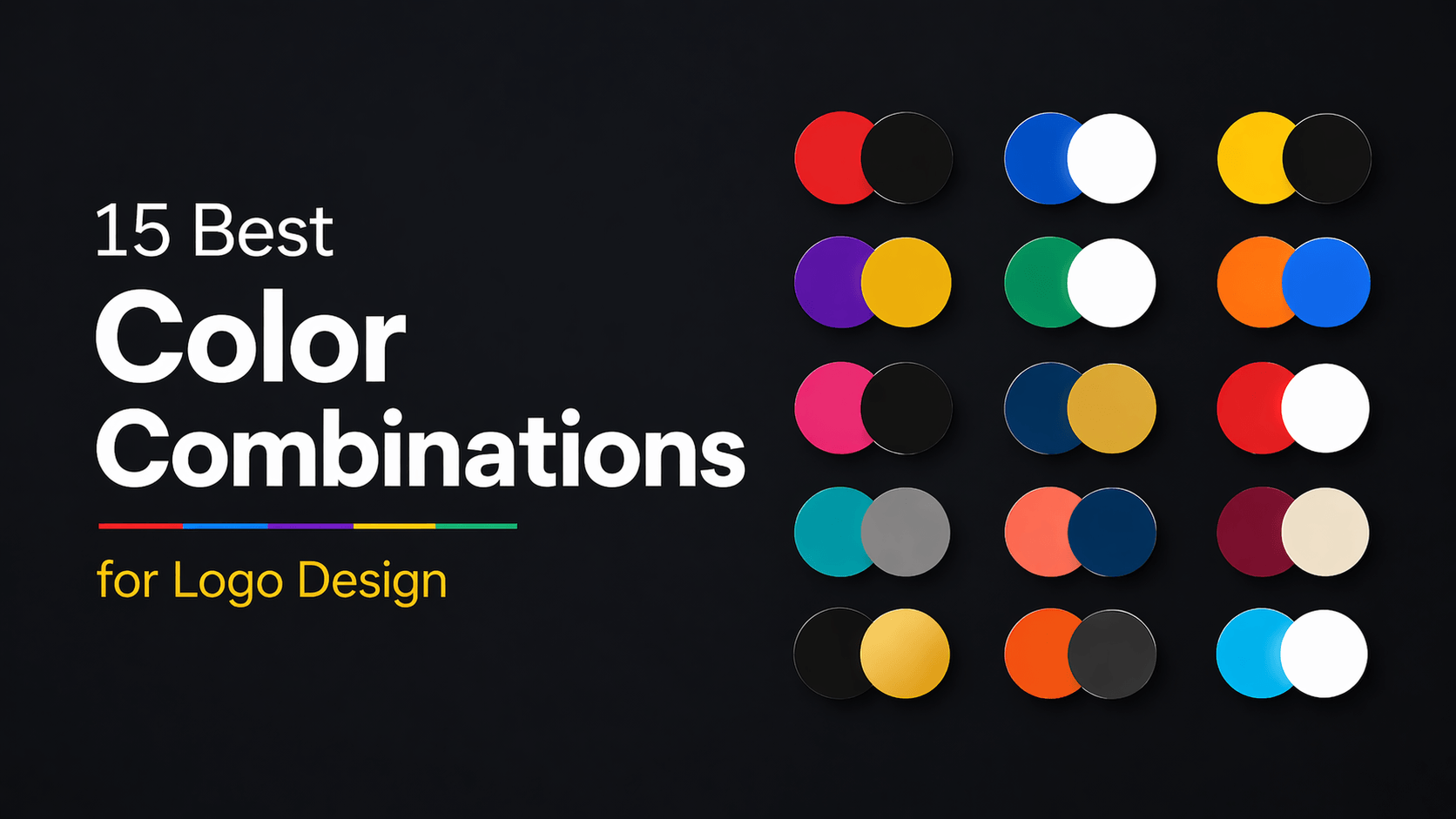
- 15 Best Color Combinations for Logo Design
- Top Logo Design Trends 2026
- Color Psychology in Design
What Is a Logo in Logo Design?
Well, before you begin the logo design process, it is advisable to understand what a logo exactly is. It is also significant to know the role that it plays for a company in today’s modern and commercialized market. A logo might actually look like just a little mark, but it is actually the face of the brand or the company it is representing.
As we know by now, a logo is a design symbolizing one’s organization. A logotype is a graphical representation of a company name, its trademark, abbreviation, etc., often uniquely designed for a particular brand, company or person. It is a design that is used by an organization for all legal purposes. The logo of a company can be seen on its letterhead, advertising material, packaging, and signs, etc.
According to Wikipedia, a logo is a graphical emblem that is commonly used by commercial entities, organizations or individuals to aid and promote instant public recognition. Logos can either be entirely graphical or alternatively, they can be composed of the name of the organization. They can also be a combination of symbols and text.
Why Is Logo Design Important for a Brand?
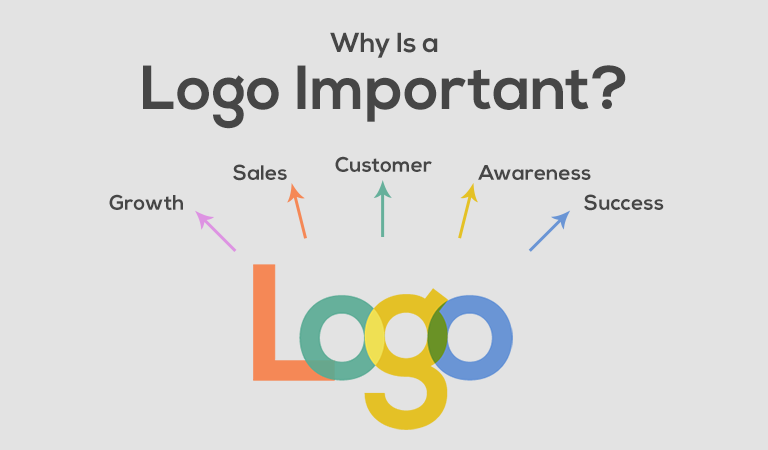
The logo of any organization is like it’s identity. When a logo becomes famous, people recognize the company’s name with the logo designs. Take the example of any car company, even a three-year-old today can recognize the cars with their logo. This is the kind of impact a logo has on its viewers.
Thus, it is very important to create a perfect logo. A logo which creative, unique and unforgettable is the one that goes a long way in making a business successful. A common or an ordinary logo will not have any impact on the audience. An uninteresting logo will not be remembered as the other unique ones are.
The Complete Logo Design Process Guide
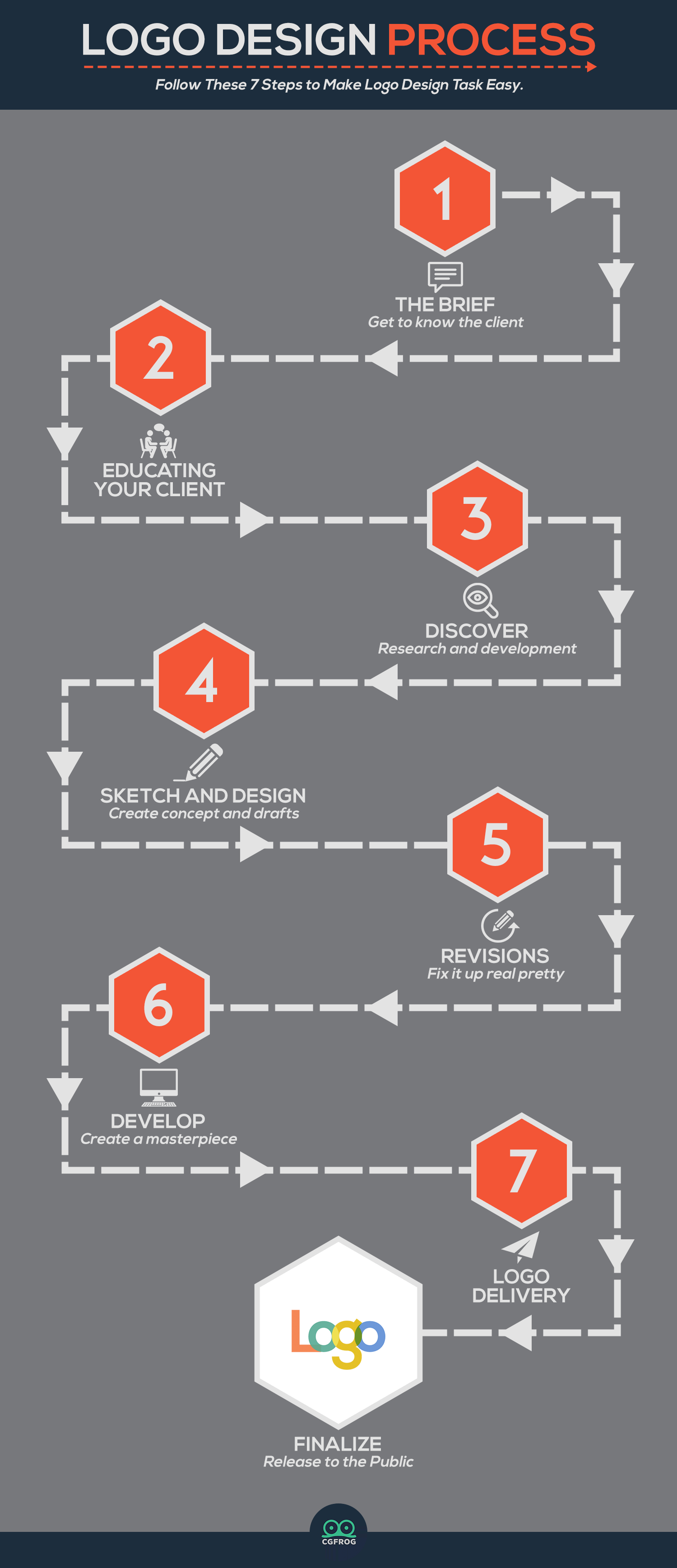
A well-defined process makes any task easy. A clear modus-operandi also leads to great results. Thus, this logo design process will surely give you an insight into how to design a logo which is perfect. Organizations, big or small, all of them ultimately look up to this design process to simplify their task.
1. The Brief
Get to know the client
2. Educating Your Client
Have you ever thought, why an uneducated client is also an unhappy client? What brings in this dissatisfaction in clients coupled with unreal expectations? Read more: Educating Your Clients
3. Discover
Research and Development
4. Sketch and Design
Create Concept and Drafts
5. Revisions
Fix it up real pretty
6. Develop
Create a masterpiece
7. Logo Delivery
Types of Logos
1. Symbolic or Iconic Type
The symbolic or iconic type of logo design usually represents the company in a simple way and uses an image which is stylish and is visually attractive. The image can be abstract in nature as well. This type of logo leaves a great visual impact on the audiences.
Examples:

2. Lettermarks
Lettermarks are typographic and are actually the initials of a company’s name. Many companies use this type of logo design because when their full name is too long, their name can be beautifully represented using this type. This may require using the initials of the company name which may also be difficult to pronounce.
Examples:
3. Wordmarks
Wordmarks or logotype are similar to a lettermark. A wordmark type of logo is a typical font-based style which represents the company’s name in a remarkable way. Wordmarks are used when the name of the company is catchy, unique and distinct.
Examples:
4. Abstract Logo Marks
An abstract logo, as the name suggests is a combination of several geometrical patterns or shapes. There is no boundary or limit to one’s creativity when it comes to abstract logo design.
Examples:
5. Mascots
Mascots are a unique and kid-friendly representation of a picture. This type is especially used for people who deal with items or services related to kids. Mascots are a great choice for companies that target families with kids. A mascot will communicate with your clients and convey to them your core values.
Examples:
6. Combination Mark
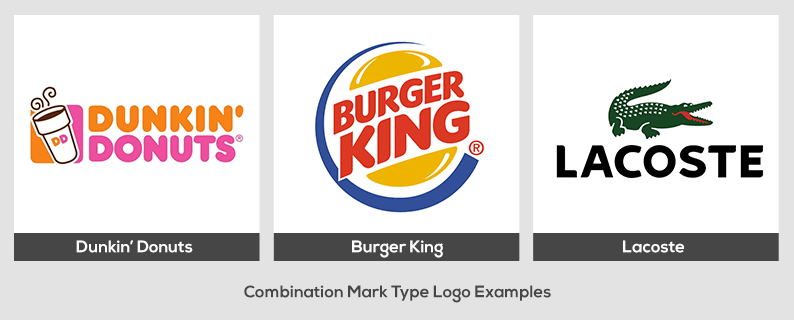
As its name suggests, a combination mark is a union of alphabets, letters, and images. A combination mark is the most popular logo design type which is widely used. A symbol and text can be combined to create magic in numerous ways.
Examples:
7. Emblem Mark
An emblem is a combination of alphabets, or a word, a sign or a symbol surrounded by a geometrical shape. Stamps are the most widely available example of this type of logo.
Examples:

8. Ambigram Type Logo
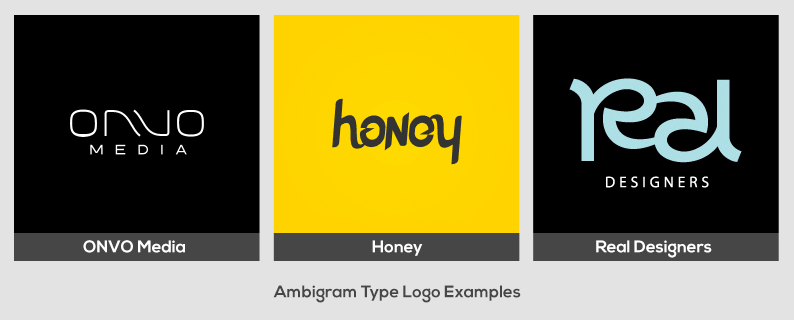
An ambigram literally means a word or symbol which is read in the exact same way when viewed from a different direction. Thus, an ambigram type of logo looks the same when mirrored or is seen from a different orientation.
Examples:
More Examples of Ambigram Type Logos
What Makes a Good Logo?
There are certain logo design principles that every designer must follow to make a logo design, good. A good logo is far more powerful than a not so good logo design. Since a logo can become quickly and easily associated with a business, it should be unique and unforgettable.
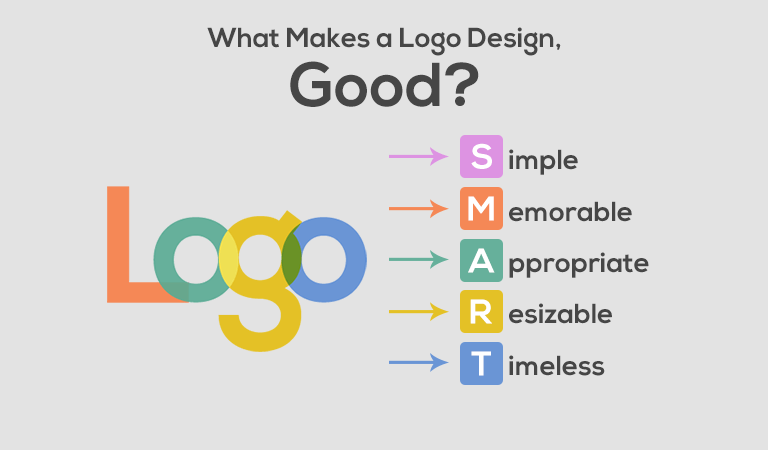
Generally, a designer must consider the following points to make a logo effective and good. Our designers at CGfrog usually follow the “SMART” concept, which stands for:
S – Simple
M – Memorable
A – Appropriate
R – Resizable
T – Timeless
As mentioned above, a successful logo clearly conveys what a company wants to say to its consumers.
Logo Design Principles
Do you think that designing is as easy as a pie?
Look into this section carefully to know what are the important logo design principles that one should follow while designing a logo. A logo design should necessarily be able to convey what a business exists for.
1. Keep it Simple Stupid
The KISS principle, as you must’ve heard, is very famous and popular. Bringing in too many things at a time may make things even more complicated. Thus, we should try to keep things simple and easy.
2. Make it Memorable
A logo must necessarily be unique and unforgettable. It should leave an everlasting brand impression on the clients’ mind.
3. A Logo Must Represent The Company
The logo must be able to represent the brand which it represents. The client must be able to judge looking at the logo as to what company is it for.
4. Make it Multi-Purpose
A logo should be such that it could be used on multiple platforms. A logo should be clear and should clearly define the brand it is representing. The logo design should be such that it could be stretched up to billboard proportions and also it could be used well on a tiny box package.
5. A Logo Should Be Proportional and Well Balanced
A logo should not be disproportional. It should rather be well balanced and appropriate.
6. Stop Using More Than 2 Colors
A logo should be carefully made with a single color or just two colors at a time. More than two colors in a logo will make it too flashy.
7. Minimal Approach
Follow the less is more approach to get the best logo design. Don’t try to incorporate too many elements into one single logo. Trying to bring in too much in one logo will make it look cluttered and confusing. Thus, one consistent symbol or shape should be used. Special and utmost care should be taken while designing a logo for a brand. This will also help in maintaining longevity.
8. Versatility Is The Key
A logo should be versatile and multifaceted. A brand must be able to use the same logo for all its product lines.
9. Once for The Lifetime
A logo remains with the brand for its lifetime. It takes a lot of resources in terms of time, money and efforts to design a great logo for a brand. Thus, people do not change its logo every now and then. Therefore, a logo should be such that it could be with the brand for a lifetime.
10. Small But Catchy Mottos
A brand is also known by its tagline. The motto or the taglines of brands must be easy and catchy. Long and complicated catch lines are hard to remember. The taglines should be less than seven words to make it rememberable.
11. Play Well With The White Space
A designer must be very well aware of the usage of space. He must leave plenty of white space and utilize all the space well.
12. Timeless
A logo should be both modern and timeless at the same time. When a company launches its logo, it remains associated with it for years. Thus, a logo should be something that doesn’t age with time.
Color Psychology in Logo Design
Color is the element of a logo that gets processed fastest. Before a viewer consciously registers shape or reads text, they have already received an emotional signal from color. This makes color selection one of the highest-stakes decisions in the entire logo design process.
The associations most relevant to brand design:
- Blue — Trust, reliability, professionalism. Dominates finance, tech, and healthcare. The safest choice for brands that need to communicate authority. Check our complete guide to shades of blue for exact hex codes.
- Red — Energy, urgency, passion, appetite. Food brands, retail, entertainment. Demands attention but can feel aggressive in excess. See our shades of red guide for the right tone.
- Green — Nature, health, growth, sustainability. Natural food, wellness, finance (growth angle). The most versatile hue for organic and environmental brands. Browse our shades of green guide for options.
- Black — Luxury, sophistication, power. Works for premium brands across almost every category.
- Yellow/Gold — Optimism, warmth, value. Attention-grabbing but difficult to use at small sizes on light backgrounds.
- Purple — Creativity, wisdom, spirituality. Beauty, wellness, and premium consumer brands.
One principle that experienced designers follow consistently: design in black and white first. If the logo does not work without color, the structure is not strong enough. Color should enhance a solid design, not rescue a weak one.
For a deep dive on how color choices affect brand perception, read our guide on color psychology in design. And for the best color combinations that work specifically in logo design, see our logo color combinations guide.
Logo Design Simplicity and Versatility Tests
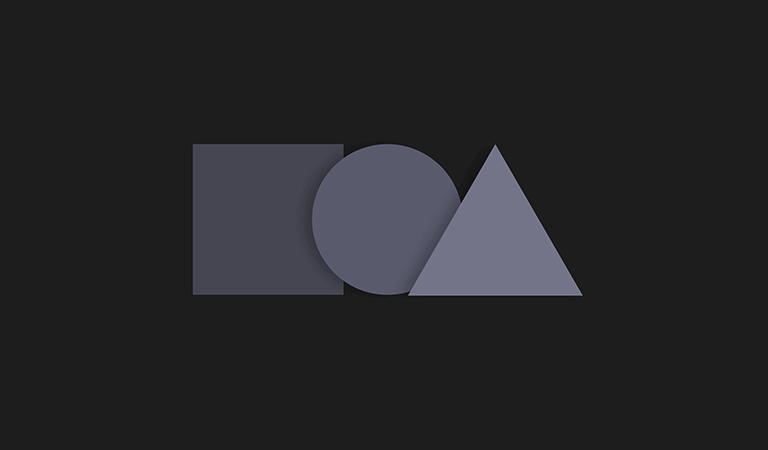
Simplicity in logo design is not about minimal effort – it is about maximum clarity. A simple logo is harder to design than a complex one because every element has to carry its weight. There is nowhere to hide. Every line, shape, and curve needs to be there for a reason.
The real test of a logo is not how it looks in a presentation. It is how it holds up under practical conditions. Before finalizing any logo, run it through these checks:
- Black and white test: Remove all color. Does it still work? If not, the design is too dependent on color to carry its meaning.
- Small size test: Scale it down to 1 inch wide. Is every element still readable and recognizable? Fine details, thin lines, and small text all break down at this size.
- Reverse test: Place it on a dark background. Does it hold up? Logos appear on dark surfaces constantly — packaging, promotional materials, dark website headers.
- Busy background test: Place it on a photographic background. Does it still read clearly?
- Embroidery test: If the brand will ever appear on clothing or merchandise, imagine the logo stitched. Gradients, thin strokes, and fine details do not survive embroidery.
A logo that passes all five of these tests is genuinely versatile. One that only looks good in a full-color, large-format presentation is a logo that will cause problems the moment it goes into real-world production.
Common Logo Design Mistakes to Avoid
After reviewing hundreds of logo projects over the years, the same mistakes come up repeatedly. Knowing them in advance saves a lot of revision cycles.
- Designing for yourself instead of the audience. Your personal aesthetic preferences are irrelevant if the target customer responds differently. The logo needs to work for them, not for you.
- Using too many fonts. Two is the maximum. One is usually better. Three or more creates visual noise and makes the logo look amateur regardless of how good each individual font is.
- Designing only in full color at large size. Most designers have been burned by this — the logo looks great in the presentation, then falls apart on a pen, a rubber stamp, or a social media profile icon.
- Following trends too closely. Gradients, duotones, and outlined type are popular now. They will feel dated in three years. Trend-driven logos require expensive redesigns. Principle-driven logos age far better.
- Using clip art or stock icon libraries. Any logo built from a shared icon library can be duplicated. Trademark registration is nearly impossible. Distinctiveness is zero.
- Skipping the brief. Jumping straight to design without a clear brand brief produces logos that look good but mean nothing. The brief is not a bureaucratic formality. It is what makes the difference between decoration and strategy.
Read More: Top 5 Logo Design Mistakes To Avoid
Say No to Free Logo Generator to Save Your Business Identity
The free logo design software will also enable one to get a logo at no cost. But, this is not comparable to what a professional designer can give you. The free tool is beneficial for designers who need assistance and are inexperienced. Nevertheless, the fact that the options on a logo maker tool are very limited cannot be ignored. However, it is up to the client to make a choice as per the time and budget available with them.
Logo Design Tools vs Professional Designer
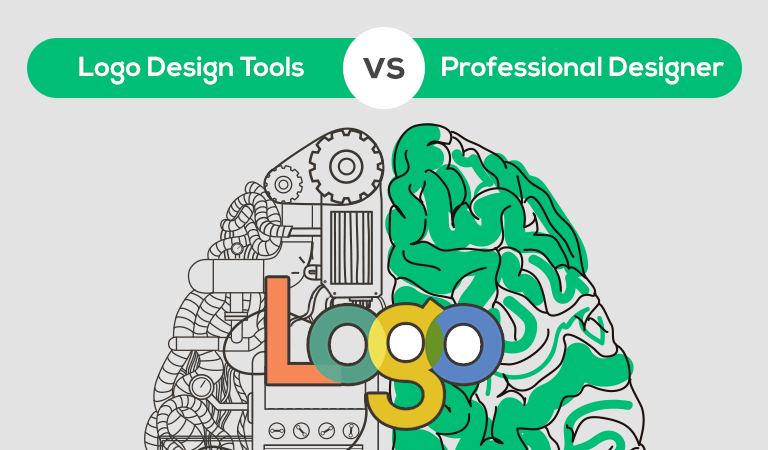
When to Get Professional Help
DIY logo tools have improved significantly in 2026. Canva, Looka, and AI-powered generators can produce something presentable in minutes. For a very early-stage project with no budget, they are a reasonable starting point.
But there are situations where a professional designer pays for itself very quickly:
- When the brand is going on physical products, signage, or merchandise – where production file quality matters.
- When the brand needs to stand out in a competitive market rather than blend in.
- When the logo will represent the business for five or more years.
- When the business is seeking investment or launching publicly – first impressions with stakeholders carry real consequences.
- When trademark registration is planned – a professional can design with originality and conflicts in mind.
A well-designed logo from a professional is not a cost. It is one of the highest-return brand investments a business can make – because it compounds every time the brand appears anywhere.
DIY Tools vs Professional Designers
While getting a logo for your business, you may have an option of choosing between a free logo design tool or a professional designer. Some people who are in short of time may at times look for some free logo design software.
Need a professional logo designed? CGfrog has been creating brand identities for over 14 years. Our team handles everything from concept to final files – with unlimited revisions and full copyright transfer. Packages start from $39.99. View CGfrog logo design packages →
Logo Design Tips and Tricks
Tips and Tricks to Design a Perfect Logo
Designing a logo involves a great deal of patience. This art can also be learned through practice. Whether you are an expert designer or a beginner, these logo design tips if handy will surely add to your skills. A logo leaves an everlasting impression on the audiences’ mind. Thus, we should be super careful while creating a brand identity. Read more: The Recipe For a Perfect Logo Design
Tips for Becoming The Most Wanted Logo Designer
There are so many designers in the industry. But, have you ever thought what makes you different from the other designers in the market?
These tips will help you to become the most wanted and popular logo designer in your area. This is important because a designer is not just a designer, but a person who shapes the future of a brand. And everyone would like to hire a designer who is popular. So, read through these super cool tips.
What Do Clients Want?
A business runs around the client. You must’ve surely heard the very famous saying that the customer is the king. Thus, it is significant to know what clients look for.
Now that you know how to design a logo, you must also know what are the client expectations.
- Positive feedback from past clients can work wonders in terms of getting new projects for you. Happy past clients and testimonials can go a long way.
- Your nature to accept challenges, your timeframe and the amount that you charge over your competitors is another important factor.
- How you take up the brief, how you communicate and how professional you are some more key points. Be prompt and trust me, your client will come back to you. This will also help you get more clients for your business. And, most importantly you should remember that a client is looking for a solution to his problems (This is a million dollar tip!). Read more: 15 Surprising Ways to Get More Clients
Before You Start The Project, Educate Your Clients
You must be wondering how educating a client is related to designing a logo. It is to a great extent!
When designing; a logo or anything else for that matter, the clients’ reactions play a significant role. Thus, it is important to know what a client actually wants. Thus, a designer must communicate with the clients to gauge and understand the clients’ requirements. This should be done as uneducated clients will always be unhappy clients.
How To Treat Your Clients?
A very important part of learning how to design a logo is knowing the trick to maintain your clients for the lifetime. And this is possible only if you are sincere, honest and a superb designer. You should treat your clients in a way that they are in full praises for you. They should come back to you whenever they need a design or solution to any of their designing problems.
Logo Design Inspiration
Logo design ideas and inspirations can get the creativity flow into your bloodstream with double the speed. Thus, below are mentioned some wonderful inspirational post exclusively for you all.
- 25 Best Clever Logos of Common Words in English Nouns
- 16 Awesome Typographic Animations of Different Words
- 25 Clever Logos Of Common English Verbs
- Inspiring Examples: Clean and Smooth Animations of Hand-Lettered Logos
- Clean Minimalist Animal Logos and Their Design Process
- 100 Pleasant Examples of Bird Logo Designs for your inspiration
- 100 Most Creative Logo Designs For Your Inspiration
- 50 Fox Logo Designs, Images, Example for Your Inspiration
- 50 Beautiful Examples of Creative Lotus Logo Design for Your Inspiration
- 30 Surprising Ambigram Logo Design Examples
Recommended Resources
- Looking for professional logo templates and brand identity assets to speed up your workflow? Envato Elements gives you unlimited access to logo templates, mockups, fonts, and brand identity kits under a single subscription.
- For individual assets and handcrafted logo kits from independent designers, Creative Market has one of the largest collections of premium logo design resources available.Need a professional logo designed from scratch? 99designs connects you with vetted designers for logo and brand identity projects at every budget level.
Conclusion
Phew, wasn’t that a long one?! But trust me Frogians, there is a lot of information to take away from this post. So, I’m sure that the next time you’re up for designing a logo, or if you wish to know anything about how to design a logo, this post will apparently prove to be of great help.
If you wish to learn how to design a logo, do follow the points laid down in this post. Tell us which one turned out to be the best one for you. Share this post with your friends and fellow designers. So, whilst this guide would serve as a base for your latest logo design project, as a designer, you should always be up for experimenting!
FAQ
Start with a brand brief – define the brand’s personality, target audience, and key values before opening any design tool. Research competitors to identify visual patterns in the category. Choose the right logo type (wordmark, combination mark, etc.), select typography and colors that match the brand’s message, sketch multiple concept directions, then execute the strongest concept in vector format using Adobe Illustrator or a similar tool. Test the final design in black and white, at small sizes, and on various backgrounds before delivery.
A good logo is simple enough to be recognized at a glance, distinctive enough to stand apart from competitors, versatile enough to work in one color and at any size, and relevant to the brand it represents. The best logos communicate something true about the brand’s personality without needing text to explain them. Simplicity is the hardest quality to achieve and the most valuable one to aim for.
The five core logo design principles are simplicity, memorability, versatility, relevance, and timelessness. Simplicity ensures the logo is instantly readable. Memorability means it can be recalled after a single viewing. Versatility means it works across all applications and sizes. Relevance means it accurately represents the brand and resonates with the target audience. Timelessness means it avoids trends that will date it quickly.
For very early-stage projects with no budget, DIY tools like Canva or AI logo generators are a reasonable temporary solution. For any brand that will be on physical products, public-facing materials, or in a competitive market, a professional designer is worth the investment. A professional understands trademark considerations, file format requirements for production, and how to create genuine distinctiveness – none of which DIY tools can reliably deliver.
A professional logo package should include vector files (AI and EPS for print production, SVG for web), raster files at high resolution (PNG with transparent background, JPEG for general use), and versions in full color, black, white, and single-color. Both horizontal and stacked layout variations should be included where applicable. Never accept a logo delivered only as a JPEG or PNG – without vector files, scaling and production will always be limited.
A professional logo design process typically takes one to three weeks from brief to final delivery, depending on the number of concepts presented and revision rounds. Rushed logos almost always require redesigns sooner. The research and brief phase alone should take several days on any serious project. A logo that will represent a brand for years deserves more than a few hours of work.
A logo is a single mark – an icon, wordmark, or combination that identifies a brand. A brand identity is the complete visual system built around that mark: color palette, typography system, iconography style, photography direction, pattern and texture usage, and application guidelines. The logo is the foundation. The brand identity is the full architecture that makes a brand visually consistent across every touchpoint.
Don't Miss
10+ Best Logo Design Books Every Designer Must Read in 2026
Beyond Cold DMs: How to Build a 6-Figure Design Business via Word-of-Mouth Marketing
15 Best Color Combinations for Logo Design (With HEX Codes & Examples)
7 Colors That Could Get You Sued If You Use Them in Branding
Top 5 Logo Design Mistakes To Avoid