It’s Bubblegum, Not ‘Light Pink’: The Ultimate Color Thesaurus for Every Imagineable Shade
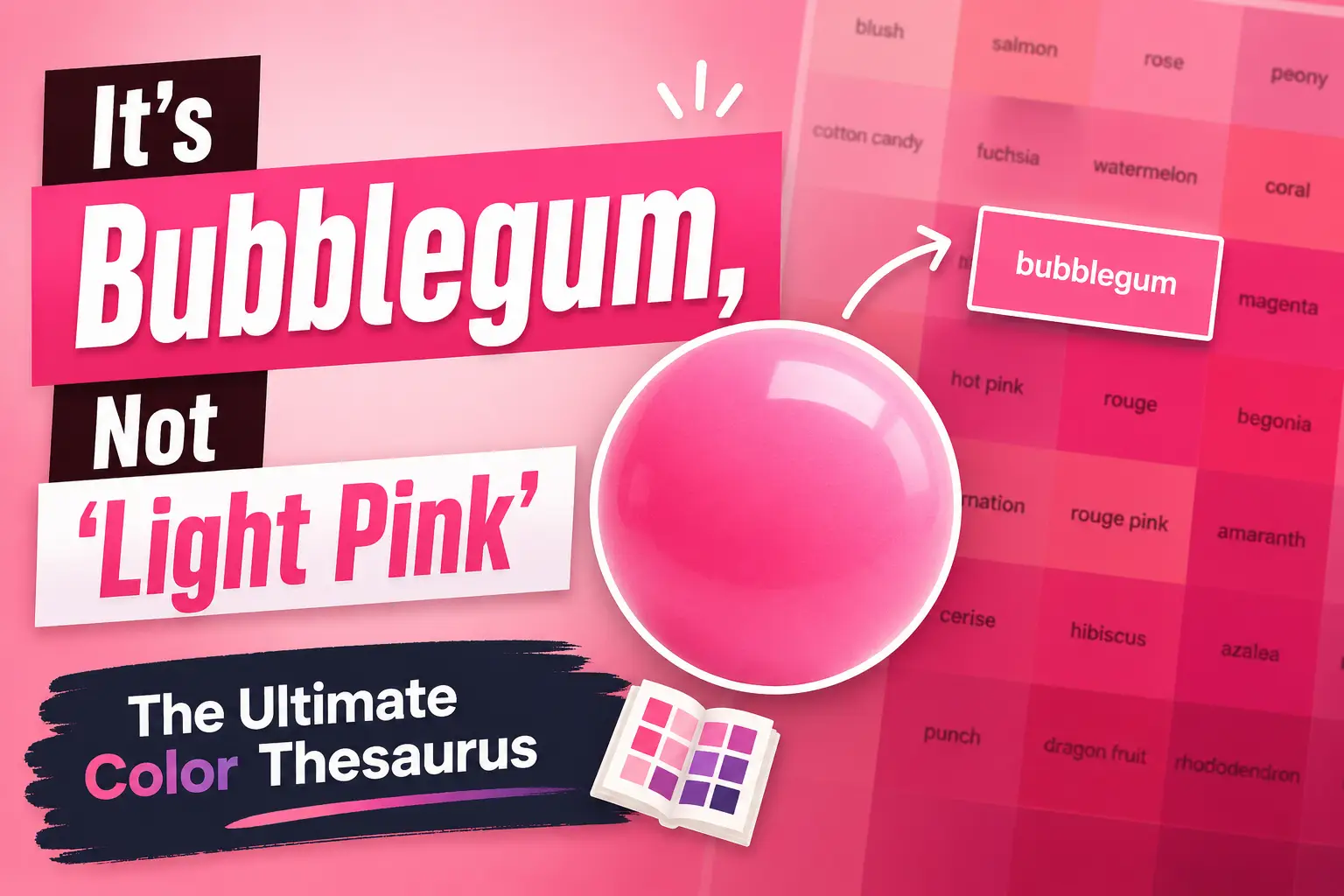
Stop calling everything “dark blue” or “light red.” If you’re a writer, designer, or just someone tired of sounding like you’re using a toddler’s crayon box, you need a Color Thesaurus.
As author Ingrid Sundberg famously proved, “Indigo” is not just dark blue, and “Cherry” is definitely not just dark red. Sundberg created a personal collection of color names by pulling inspiration from everything around her.
“Having a variety of color names at my fingertips helps me create specificity in my writing,” she says. “I can paint a more evocative image in my reader’s mind if I describe a character’s hair as the color of rust or carrot-squash, rather than just red.” Example Color Names Guide
Color Thesaurus with Color Shades
Below, you’ll find the correct names for every shade imaginable. Time to upgrade your vocabulary.
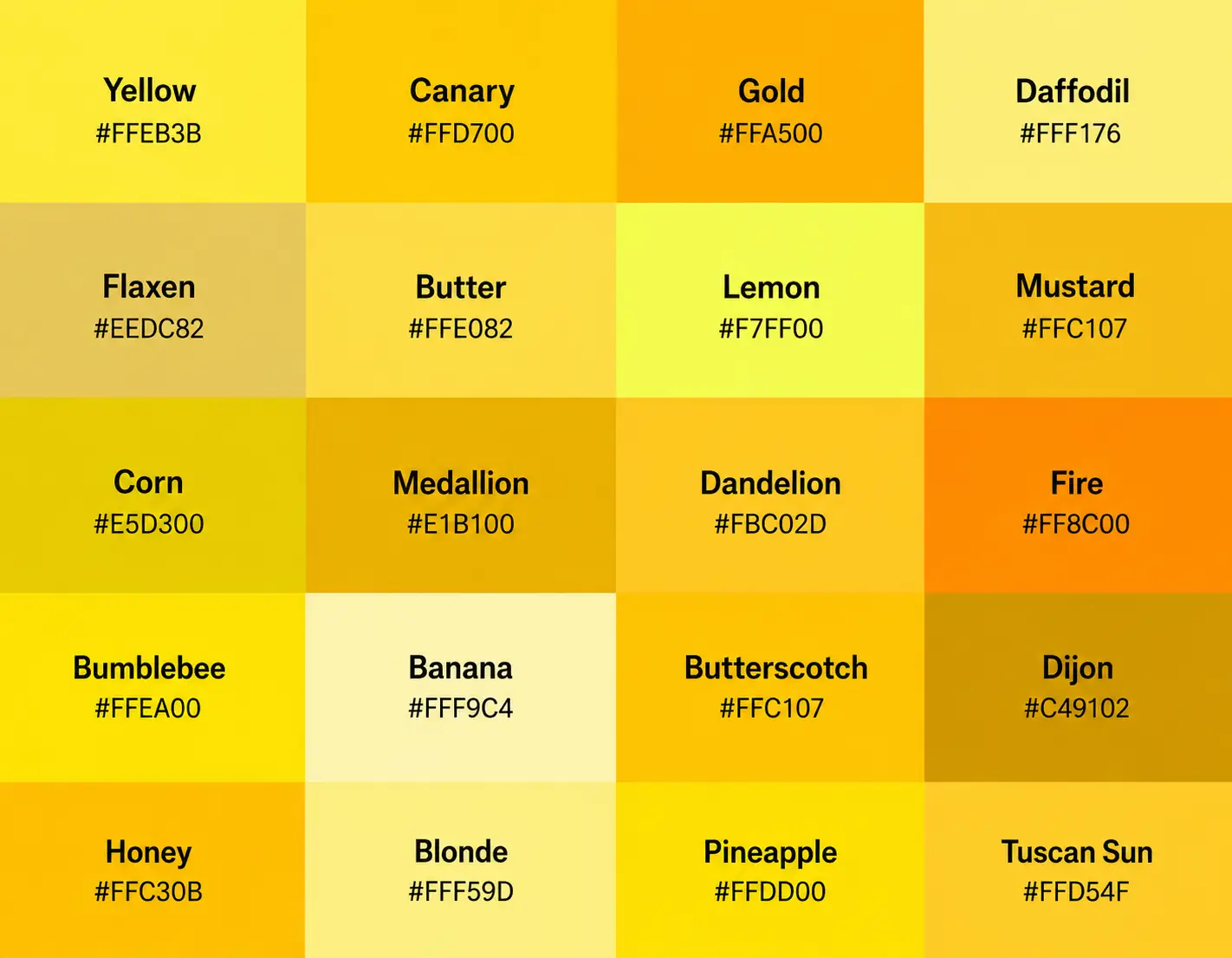
1. Shades of Yellow: Vibrant and Warm
Don’t settle for “bright yellow” when you can describe a sunset as Amber or a flower as Canary.
Top Shades: Amber, Saffron, Gold, Mustard, Canary, Flaxen, Lemon.
2. Shades of White: The Art of Subtlety
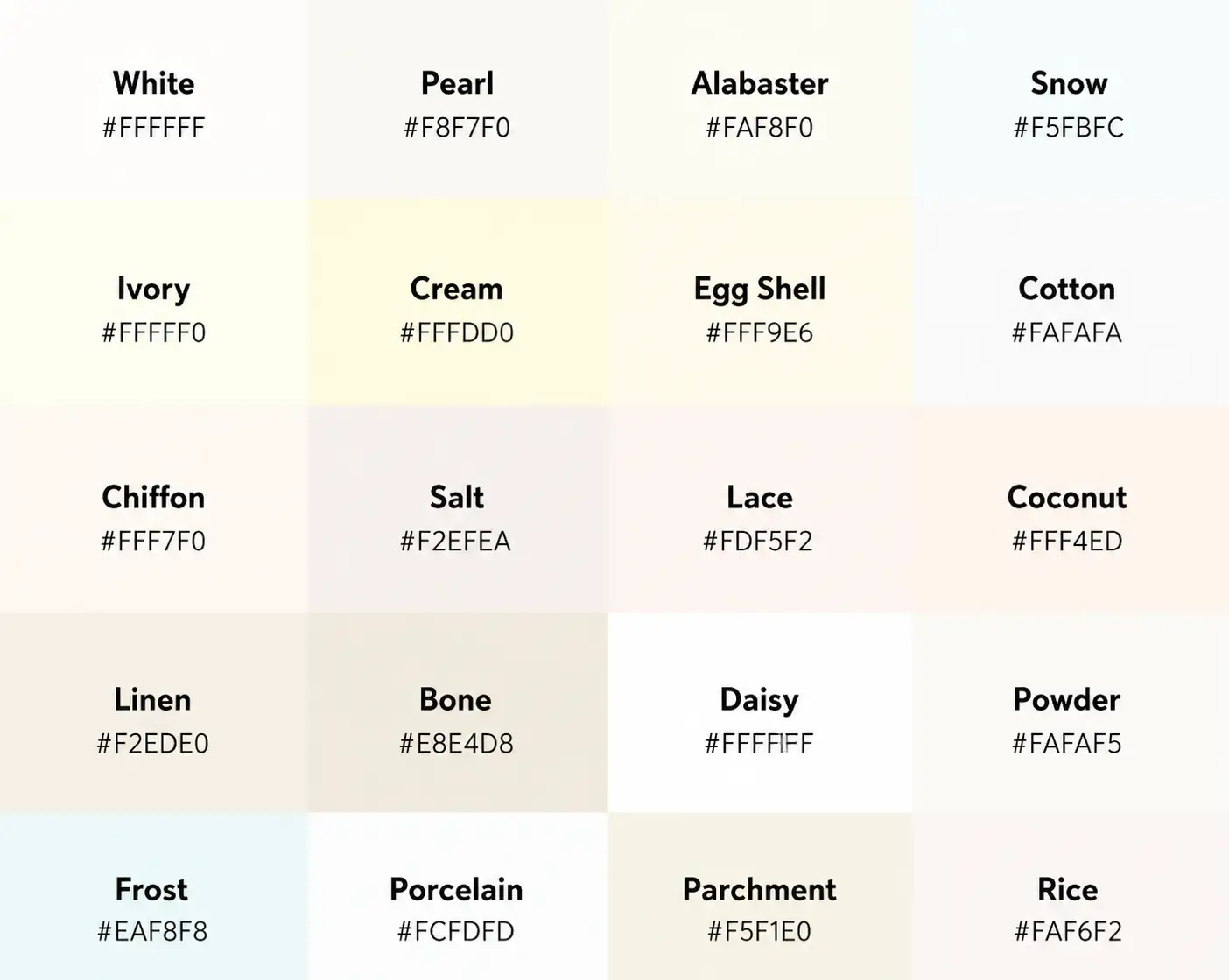
In the design world, “white” is never just white. Is your minimalist room Ivory or Alabaster?
Top Shades: Ivory, Pearl, Alabaster, Cream, Eggshell, Bone, Frost.
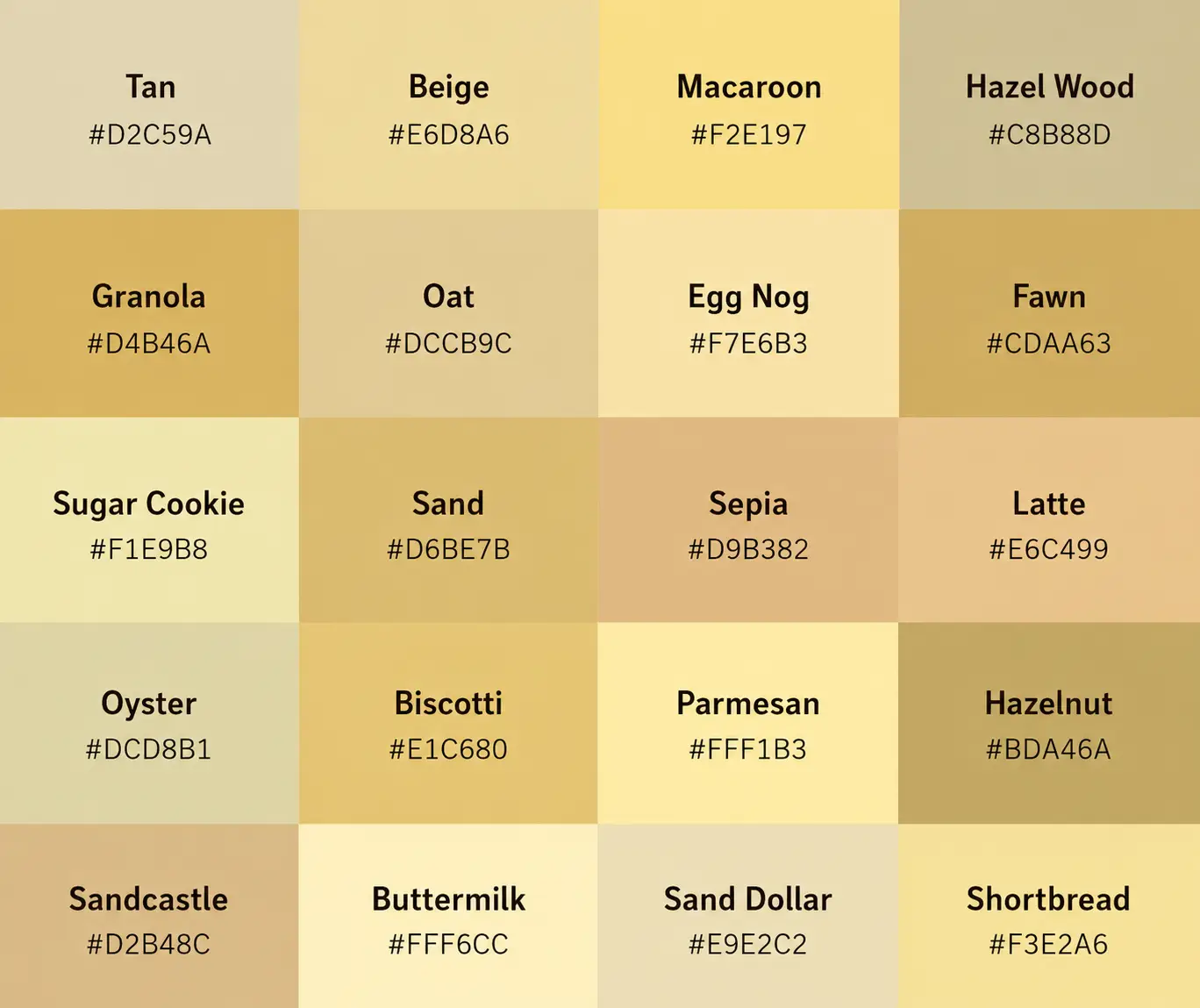
3. Shades of Tan: Earthy and Elegant
Stop saying “light brown.” Use Oatmeal or Fawn to add a premium touch to your descriptions.
Top Shades: Beige, Sand, Fawn, Khaki, Camel, Oatmeal, Tawny.
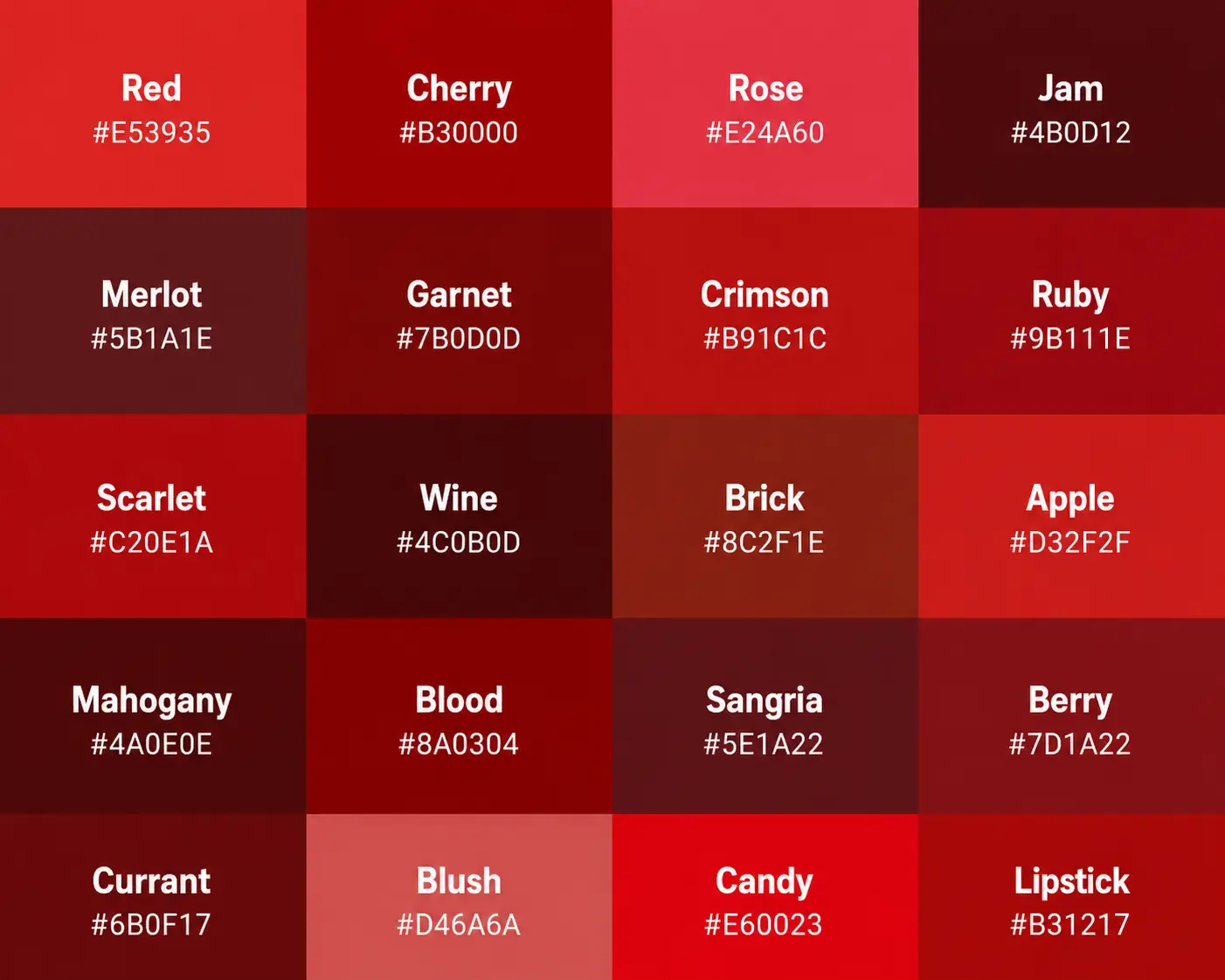
4. Shades of Red: Bold and Evocative
Red is the color of passion, but is it Ruby or Crimson?
Must Read: For a deeper dive, check out our guide on 100+ Shades of Red Color with HEX and RGB Codes or the quick list of 28 Shades of Red Color.
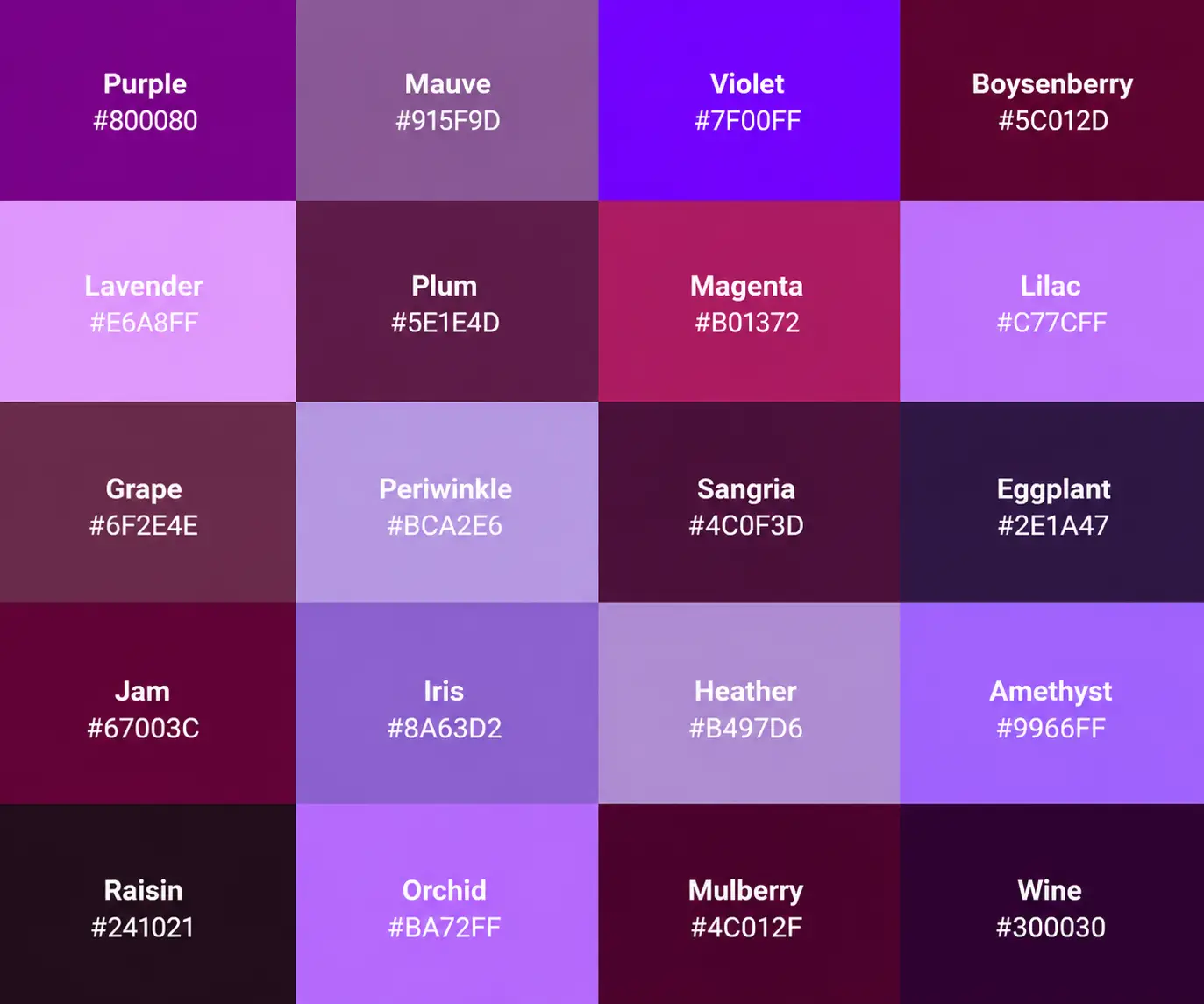
5. Shades of Purple: Royal and Rich
From Lavender to Plum, purple offers a spectrum of mystery and luxury.
Top Shades: Lavender, Plum, Orchid, Violet, Grape, Magenta, Lilac.
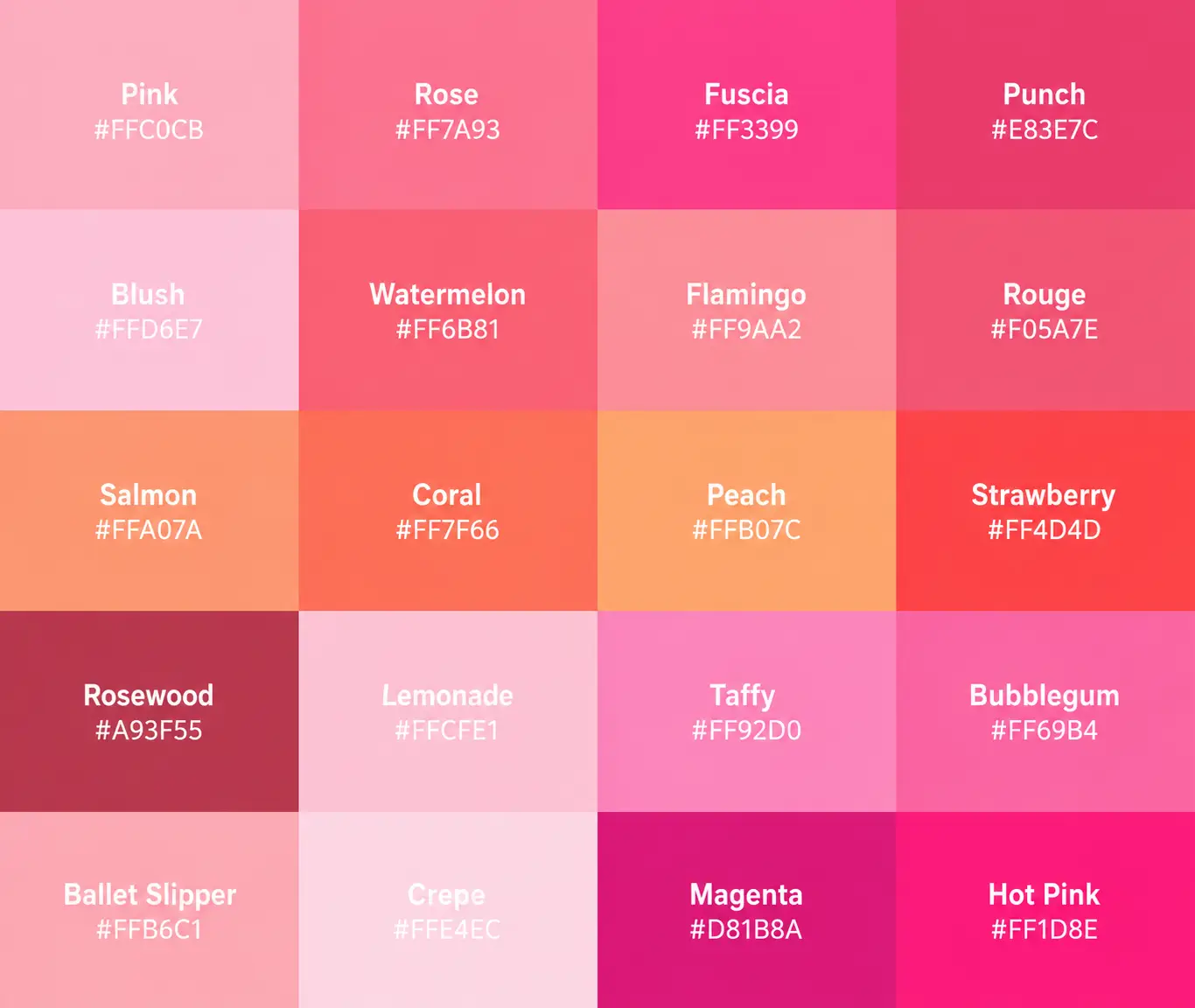
6. Shades of Pink: It’s Bubblegum, Not ‘Light Red’
Let’s get this straight: Fuchsia and Peach communicate totally different vibes.
Top Shades: Bubblegum, Rose, Flamingo, Peach, Salmon, Coral, Fuchsia.
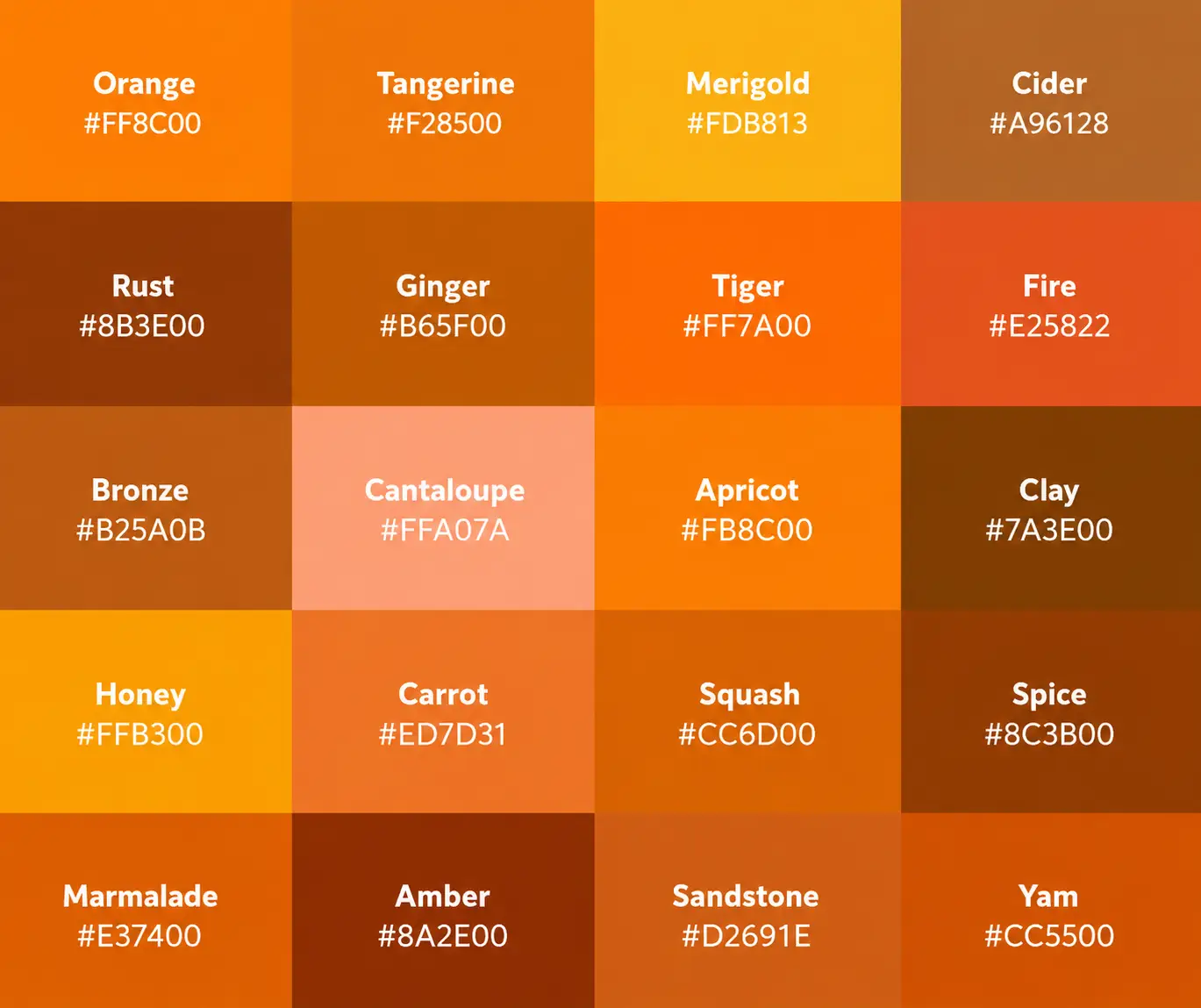
7. Shades of Orange: Zesty and Vibrant
Orange isn’t just a fruit. It’s Tangerine, Ginger, and Marmalade.
Top Shades: Tangerine, Apricot, Ginger, Carrot, Pumpkin, Marmalade.
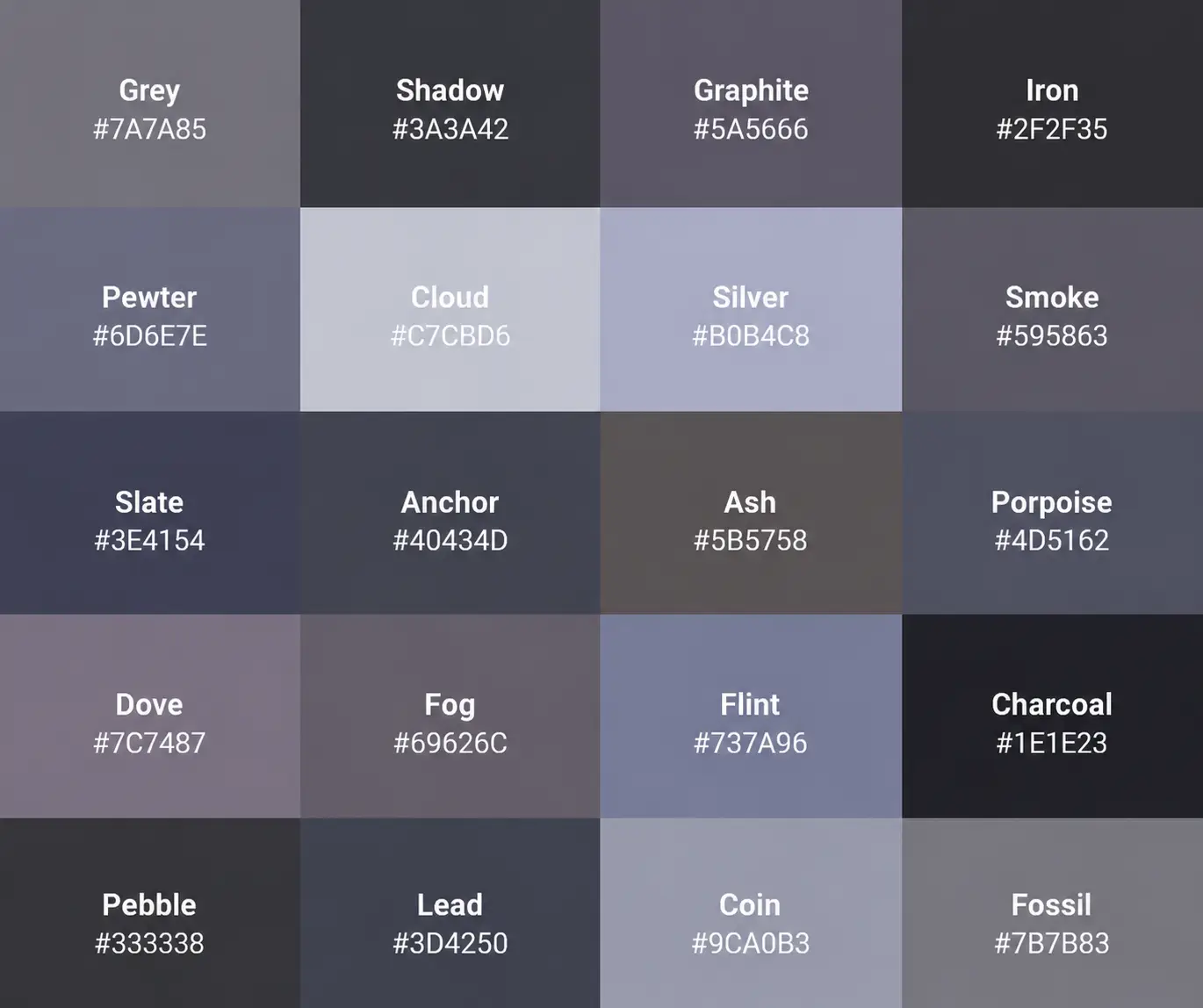
8. Shades of Grey: Sophistication in Neutrals
Grey is the ultimate neutral. Use Charcoal or Slate to add professional depth.
Top Shades: Silver, Charcoal, Slate, Ash, Iron, Dove, Smoke.
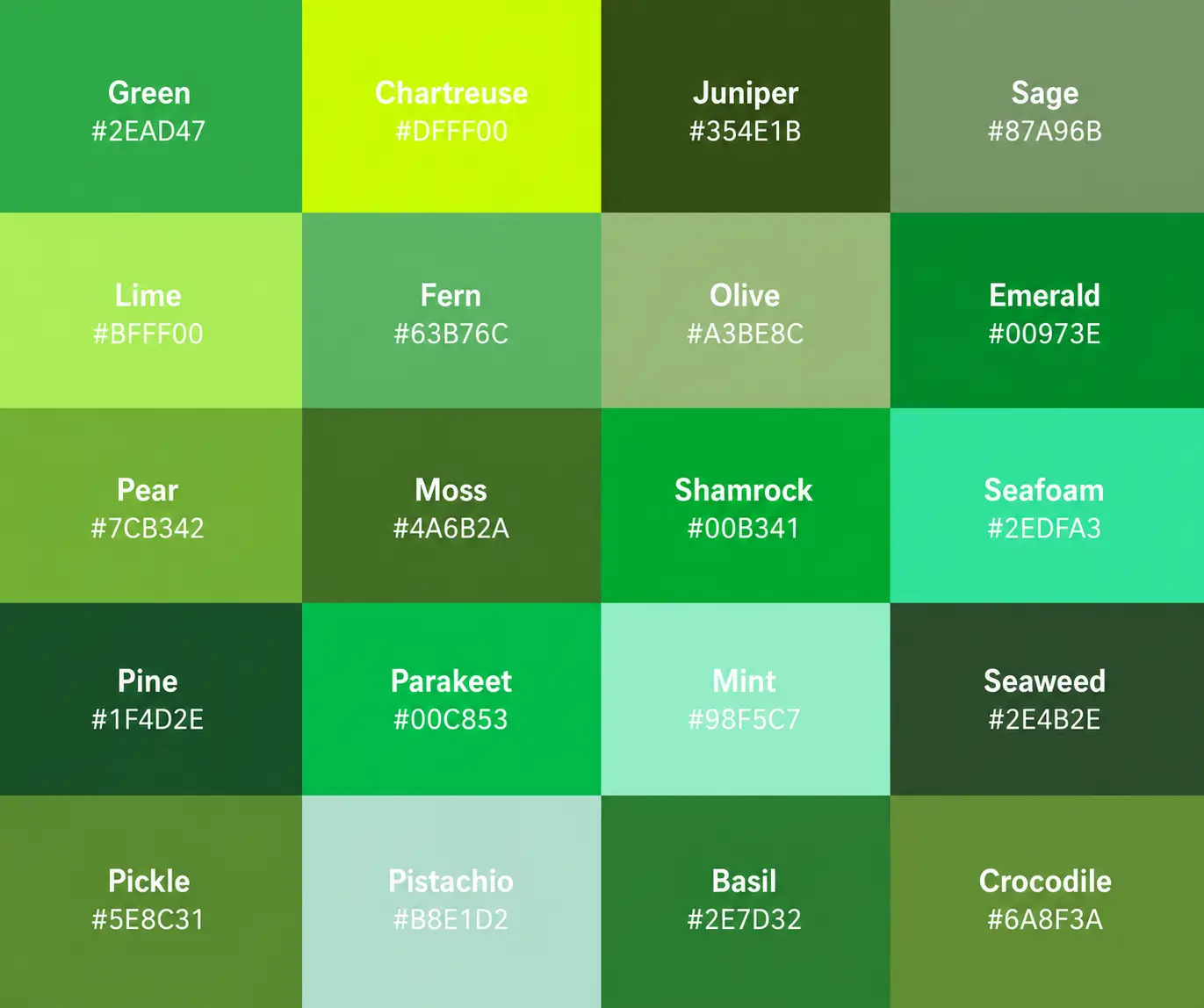
9. Shades of Green: Fresh and Natural
Is your environment Emerald or Olive? The name sets the entire mood.
Top Shades: Emerald, Olive, Mint, Lime, Sage, Jade, Forest, Seafoam.
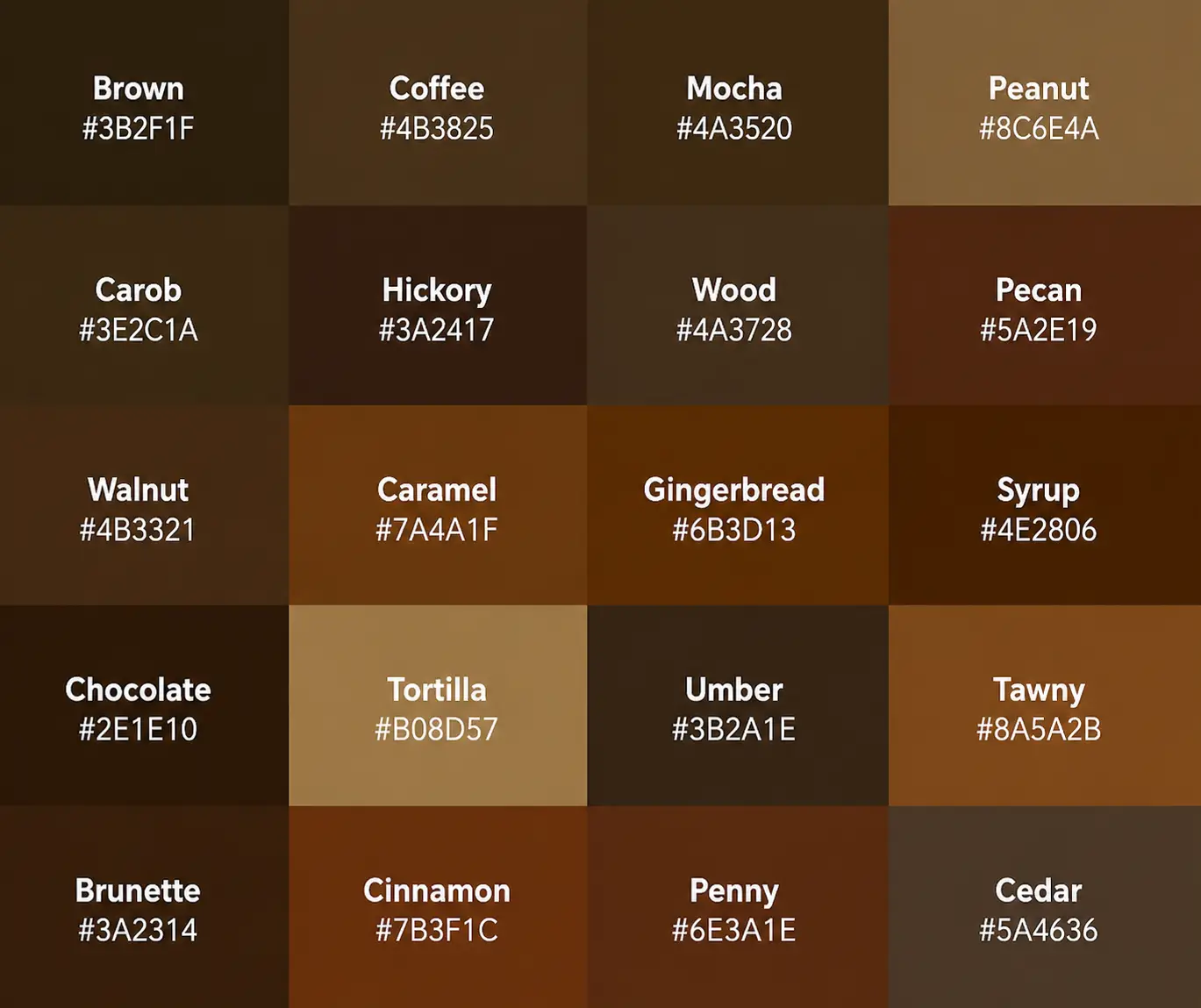
10. Shades of Brown: Warm and Grounded
Mocha or Walnut sounds much more inviting than just “brown.”
Top Shades: Coffee, Chocolate, Walnut, Sepia, Umber, Russet, Sienna.
Did You Know? Color choices vary by age and gender. Explore the data in our study on Color Preferences Based On Age And Gender.
11. Shades of Blue: Deep and Endless
Stop overusing “blue.” Explore the world of Sapphire, Teal, and Indigo.
Top Shades: Azure, Cobalt, Sapphire, Teal, Navy, Sky, Indigo, Cyan.
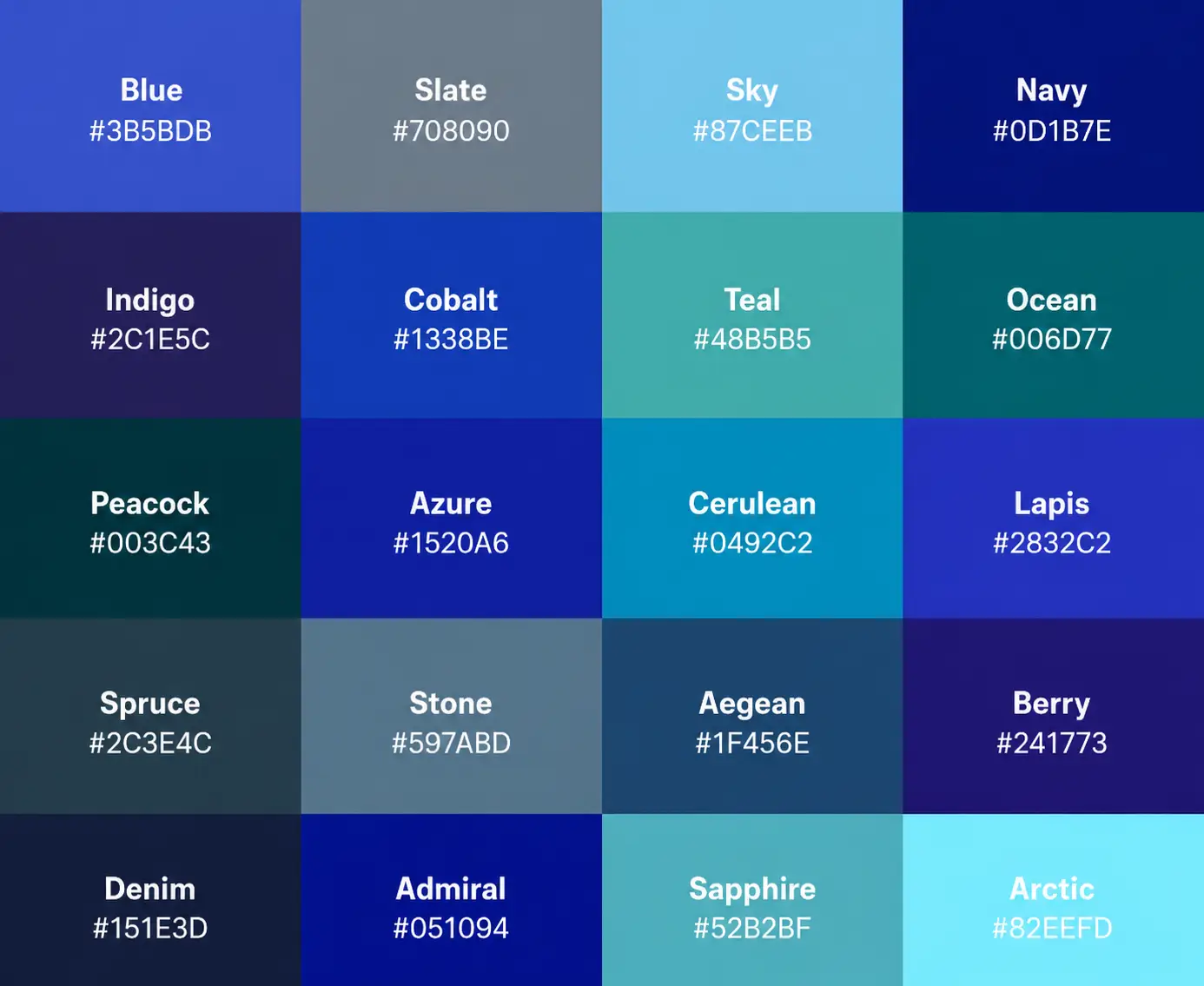
Explore our complete guide to 100+ Shades of Blue with HEX and RGB Codes for names, color codes, and palette inspiration.
12. Shades of Black: The Ultimate Depth
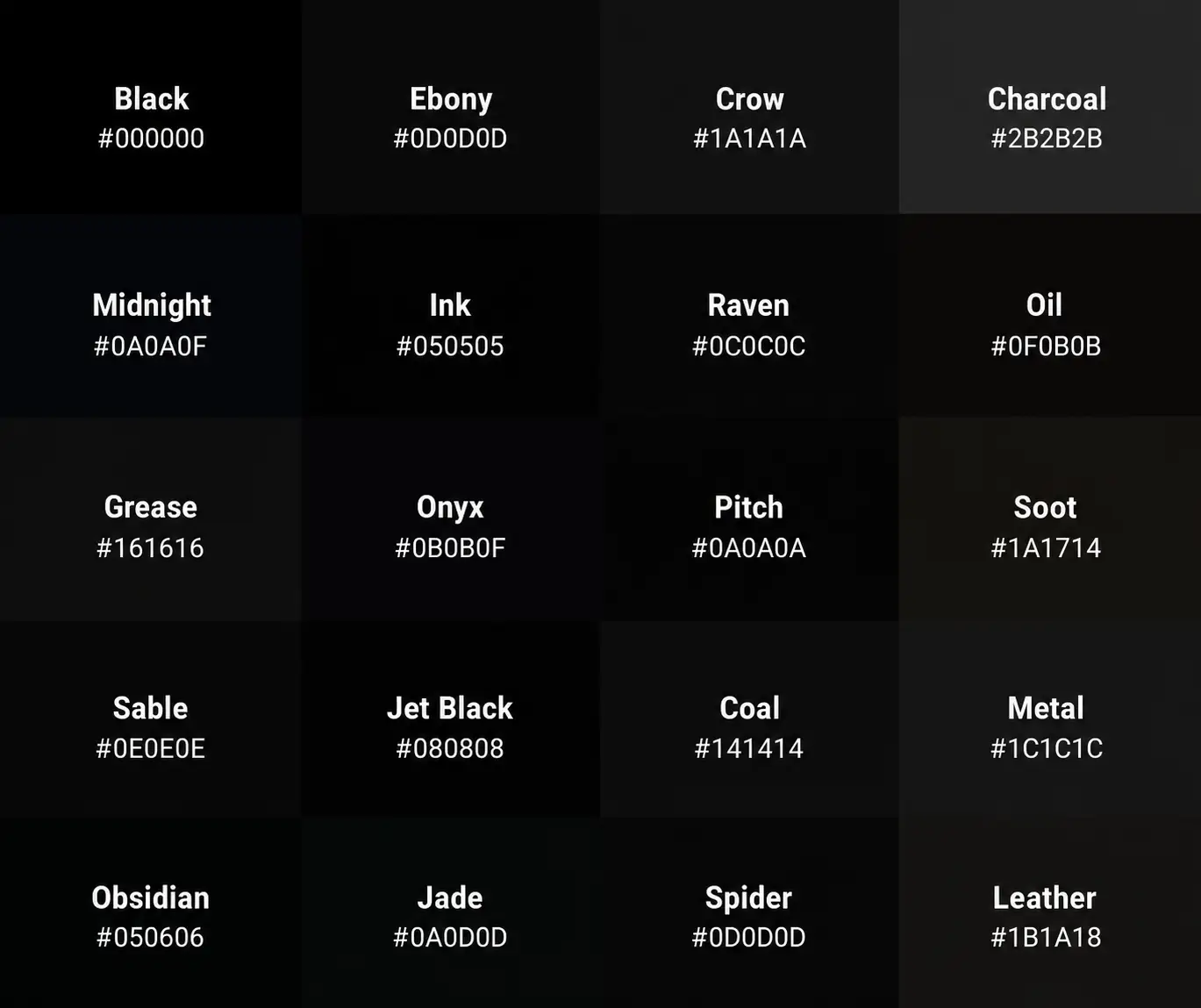
Even the darkest color has layers. Is it Onyx, Ebony, or Sable?
Top Shades: Ebony, Onyx, Jet, Charcoal, Obsidian, Sable, Ink.
Why Specificity Matters
Understanding the psychology behind these hues can change how people perceive your brand or story. Dive into the Psychology of Color Infographic to see why these names matter.
Think you’re a color expert now? Test your skills with our Quiz: Can You Match the Colors to the Brand?
What’s your favorite color shade? Did we miss a name you love? Let us know in the comments! Don’t forget to share this with your art-loving friends and colleagues.
Frequently Asked Questions (FAQ)
A Color Thesaurus is a specialized vocabulary guide that provides descriptive and evocative names for basic colors. Instead of using generic terms like “light green” or “dark red,” it offers specific alternatives like “Mint” or “Crimson” to help writers and designers create more vivid imagery.
Using specific color names from a Color Thesaurus adds depth and precision to storytelling. For example, describing a character’s eyes as “Emerald” instead of just “Green” immediately sets a mood and provides a clearer visual for the reader.
In technical terms, a hue is the purest version of a color. A shade is created by adding black to a hue to make it darker. Our Color Thesaurus covers a wide variety of both to give you the most creative options for your projects.
Choosing the right shade depends on the emotion you want to evoke. While “Navy Blue” suggests trust and stability, “Sky Blue” feels open and friendly. Referencing a Color Thesaurus can help you find a name that perfectly aligns with your brand identity.
While many names like “Indigo” or “Sepia” are universal, some names can vary between fashion, interior design, and graphic arts. This Color Thesaurus pulls from various creative sources to provide the most descriptive names used by professionals worldwide.
Don't Miss
Shades of Green: 100+ Green Color Names with HEX & RGB Codes
Shades of Blue: 100+ Blue Color Names with HEX & RGB Codes

Color Psychology in Film: How Directors Use Color to Tell Stories
15 Best Color Combinations for Logo Design (With HEX Codes & Examples)
300+ Trending Color Gradients For Your Design Projects