Professional First Impression at Business Meetings: How to Win Your First Client (2026 Guide)
In the fast-paced business world of the USA, you rarely get a second chance to make a first impression. Studies show that people form an opinion about you within a tenth of a second. Whether it’s a high-stakes interview or a kickoff meeting with a new client, your preparation, attire, and non-verbal cues are the “silent gatekeepers” of your success.
Research shows people form opinions in milliseconds, and in client meetings, those first few seconds determine whether you’re seen as a professional… or just another option.
Whether you’re a designer, freelancer, or creative entrepreneur, mastering your first client meeting can directly impact your conversion rate, pricing power, and long-term client relationships.
Don’t Miss:
- Client First Meeting Tips: How a Designer Completely Rock Their Prospective Client in The First Meeting
- 15 Surprising Ways to Get More Clients (and Keep Them Coming)
- Here Are 5 Things Your Design Client Cares About (Video)
- How Designers Should Treat with Clients
- How to Negotiate with Your Client For Better Prices
Your First Meeting or Interview With Your Client:
1. Prioritize Face-to-Face (or High-Quality Virtual Presence)
While virtual meetings are convenient, face-to-face interactions remain the gold standard for building deep trust. If you are meeting locally, choose a professional venue like a quiet café or a well-equipped conference room that reflects your brand’s quality.

According to one study, We can make the meeting more effective in a face-to-face rather than meeting through calling or video chat.
Even in 2026, in-person meetings still build the strongest trust.
If remote:
- Keep camera ON
- Use proper lighting
- Clean background (no distractions)
First rule: If they can see you clearly, they trust you faster.
2. Dress Smart: Power Dressing 2.0
The “suit and tie” era has evolved. In 2026, the trend is Power Dressing 2.0—a mix of tailored structure and personal expression.

Forget outdated “formal-only” rules.
Today = Confidence + Clean + Context
- Designers → Smart creative
- Corporate → Structured formal
- Freelancers → Minimal professional
Pro Tip:
Avoid heavy fragrances and distracting jewelry; let your ideas be the star of the show.
3. Master Business Body Language (USA Standard)
Non-verbal communication accounts for a huge part of how you are perceived.
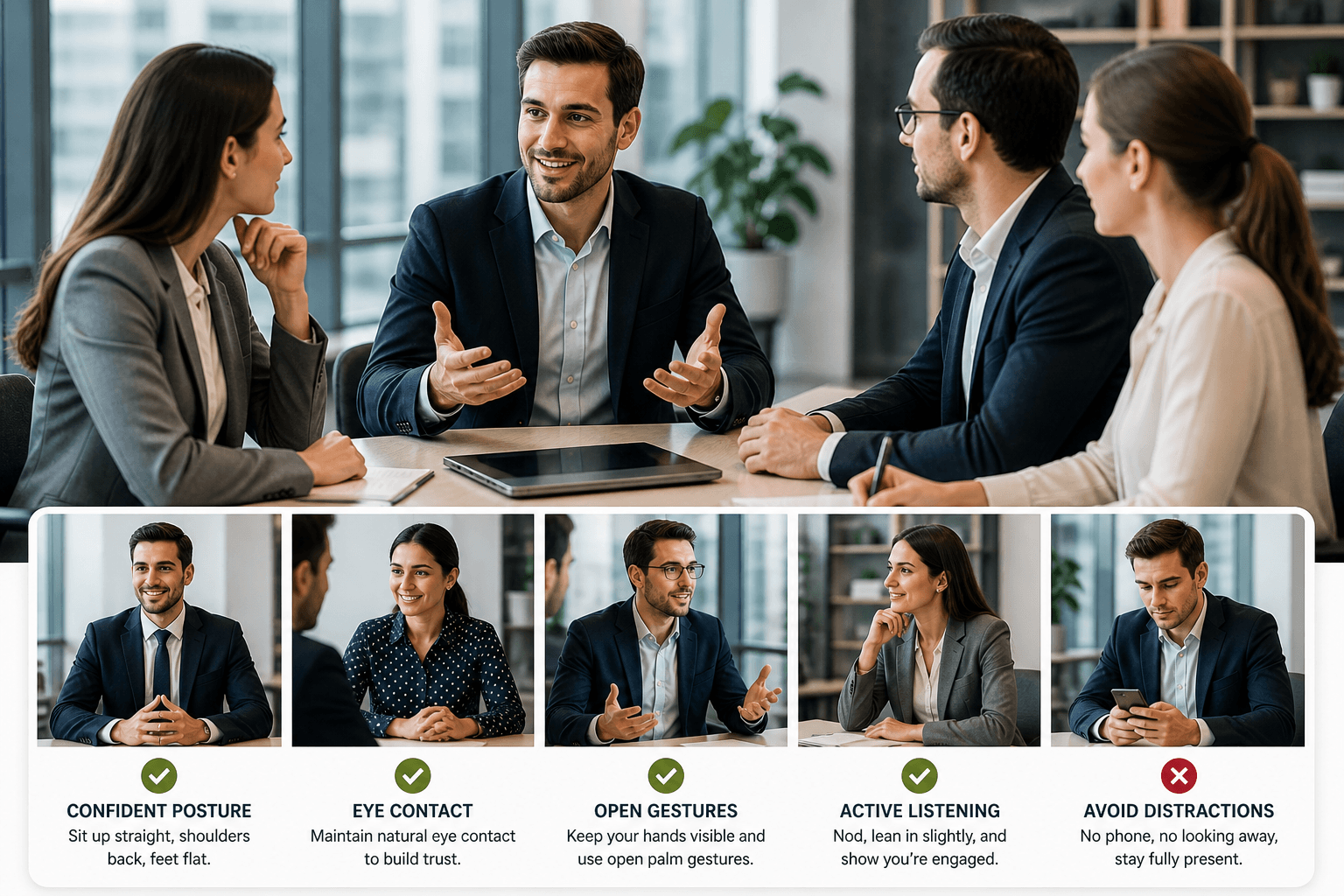
The Power Stance: Stand tall with your shoulders back. If sitting, keep your back straight and feet flat on the floor to project authority.
Eye Contact: Aim for the “leadership gaze”—maintain eye contact for 3 to 5 seconds per person to build rapport without being intimidating.
Open Gestures: Keep your hands visible and use open-palm gestures to signal honesty and engagement.
Your body speaks before you do.
- Sit straight
- Maintain eye contact (3–5 seconds)
- Keep hands visible
- Slight nodding = active listening
Avoid:
- Crossed arms
- Looking at phone
- Slouching
This alone can decide whether client trusts you or not.
4. The Art of the Handshake
In the USA, a firm, web-to-web handshake that lasts 2 to 5 seconds is standard. It signals confidence and professional warmth. Ensure your right hand is free of belongings before you approach.

A handshake is your first physical impression. It is very important to handshake in the first few seconds before start meeting, but humility should be in your nature.
- Firm (not crushing)
- 2–3 seconds
- Eye contact + slight smile
Weak handshake = weak confidence (client perception)
5. Listen More, Talk Less
One of the biggest mistakes is trying to “wow” a client with your knowledge immediately. Instead, use active listening. Ask thoughtful, intelligent questions to identify their pain points. This “problem-solving approach” shows you value their needs more than your sales pitch.

Most freelancers fail here
They:
- Talk too much
- Show portfolio immediately
- Try to impress fast
Instead:
- Ask smart questions
- Understand pain points
- Repeat their needs
This makes you look like a problem-solver, not just a service provider
6. Prepare Like a Pro (90% People Don’t)

Before meeting:
- Research client business
- Check their competitors
- Prepare 2–3 improvement ideas
Quick Checklist: Successful First Client Meeting
- On time (or early)
- Clean & confident look
- Strong body language
- Ask questions first
- Understand before pitching
- No distractions
Common Mistakes That Kill Deals
- Being late
- Overconfidence or arrogance
- Poor listening
- No preparation
- Talking only about yourself
Conclusion
A successful first meeting is not about luck – it’s about strategy + psychology + presentation.
When you combine:
- Confidence
- Preparation
- Communication
You don’t just impress clients… you win them.
Let’s make great things happen.
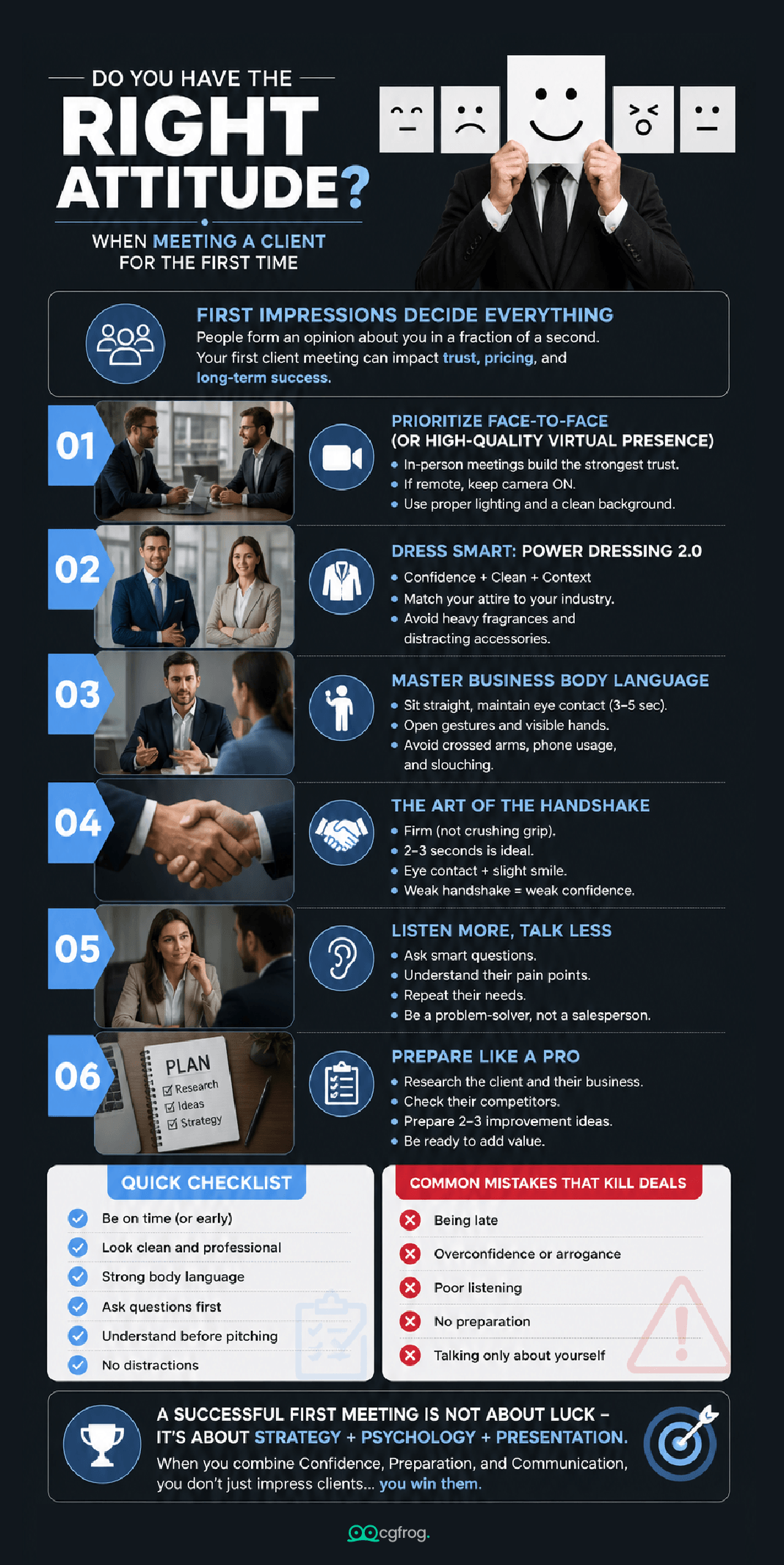
Infographic to share:
What’s one thing you always make sure to do before a client meeting?
Drop your answer in the comments 👇
Don't Miss
Principles of Visual Design: Complete Guide for Designers

20 Common Mistakes Graphic Designers Make

7 Best Apps for Designers to Make Money (Passive Income 2026)

10+ Creative Resume Designs for Graphic Designers That Truly Stand Out

Y2K Aesthetic vs Neo-Brutalism: Which Trend is Winning in 2026?