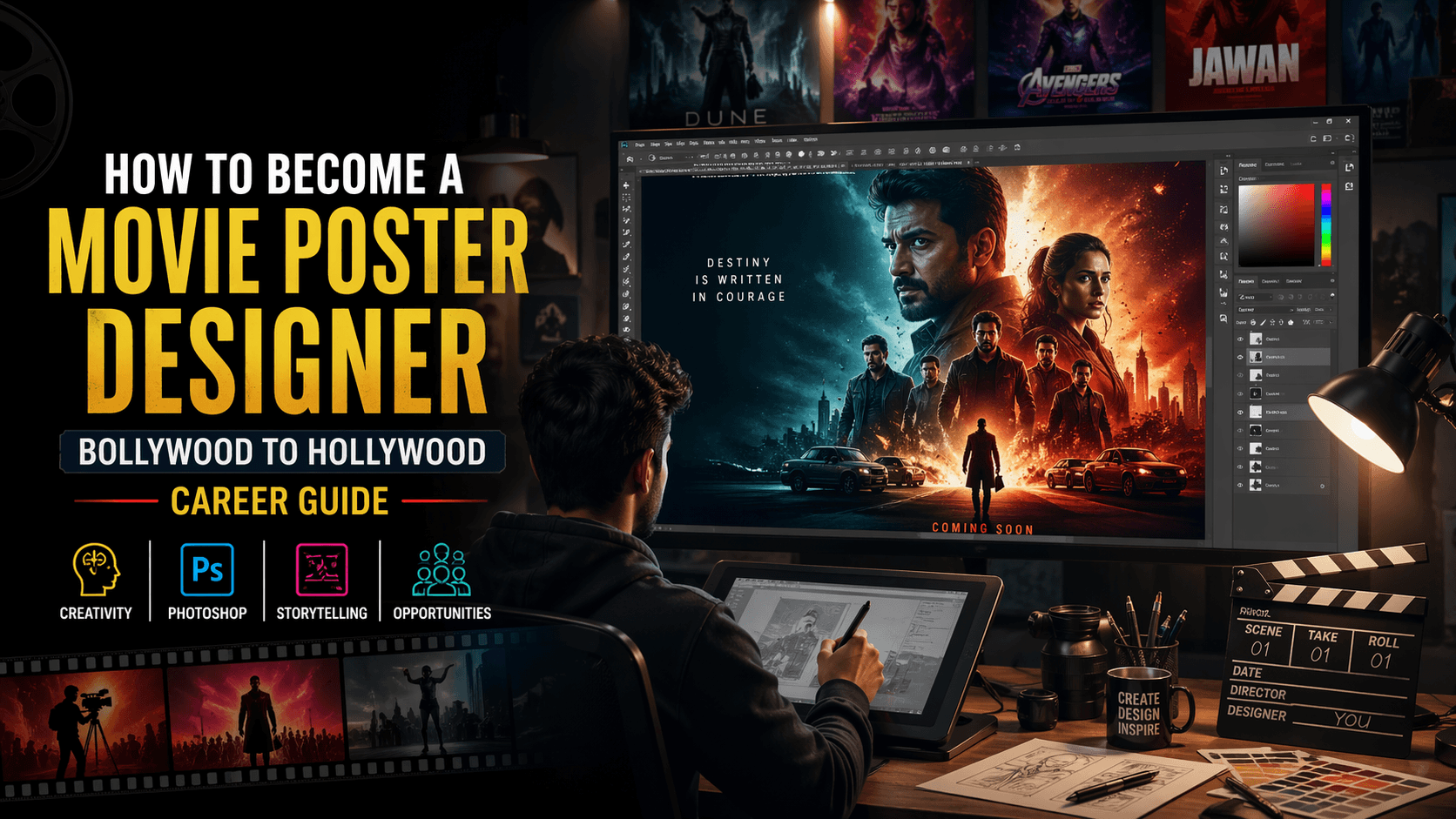
How to Become a Movie Poster Designer (Complete Career Guide for Global Projects)
The Hidden Industry Behind Movies Worldwide
From Hollywood blockbusters to Bollywood films, one thing shapes the audience’s first impression: the movie poster.
In the film industry, this is known as Key Art — the core visual identity of a film. From theatres to streaming platforms and social media, everything is built around this single visual.
This is where a powerful creative career begins.
Why Movie Posters Matter More Than You Think
Before trailers and reviews, posters define perception.
A strong poster builds hype, creates curiosity, and attracts attention. A weak one can damage a film’s first impression instantly.
In today’s digital world, visuals decide whether someone stops scrolling or keeps going.
What Does a Movie Poster Designer Actually Do?
Studios work with specialized agencies and designers to create posters.
A movie poster designer translates a film into a single visual that captures emotion, story, and marketing intent. These designs are used across theatres, OTT platforms, and digital campaigns.
This is not just design work. It is visual communication at scale.
Real Deliverables of a Poster Designer
Poster design is not limited to a single image. A complete campaign includes multiple assets.
Core Deliverables
- Key Art (main poster)
- Character posters
- Teaser or first-look visuals
- Motion posters
- Digital banners
Marketing Deliverables
- Social media creatives
- Release announcements
- Promotional visuals
Extended Assets
- Trailer thumbnails
- OTT artwork
- Billboards and outdoor formats
- International adaptations
A single project can involve dozens of variations.
The Real Process of Creating Movie Posters
The creation of Key Art follows a structured process.
Understanding the Film
Design begins with the story, tone, audience, and positioning. The goal is to define what the audience should feel instantly.
Brainstorming and Concept Exploration
Ideas are explored through discussions and visual thinking before any software is used. Strong concepts often come from simple conversations.
Concept Development
Multiple directions are created and presented. Some posters rely on star power, while others rely on strong visual concepts.
Asset Creation
Photoshoots, references, and background elements are prepared. AI tools now help accelerate early-stage exploration.
Composition and Storytelling
Layout, depth, and hierarchy define how the story is presented in a single frame.
Lighting, Color, and Typography
These elements define mood, tone, and identity.
Feedback and Iterations
Designs go through multiple revisions with input from stakeholders.
Final Key Art and Adaptations
The approved design is adapted across multiple platforms and formats.
Skills Required to Succeed
Success in this field requires a combination of technical, creative, and professional skills.
Technical Skills
- Photoshop and compositing
- Color grading
- Typography
Creative Skills
- Storytelling
- Concept thinking
- Composition
Professional Skills
- Communication
- Deadline management
- Adaptability
Building a Career in Movie Poster Design
There is no fixed path to enter this industry.
Most designers begin with general graphic design, freelance work, or small studios. Over time, they transition into film-related projects.
The most effective way to grow is to study existing posters, recreate them, and build a strong portfolio.
Originality matters more than following trends. Designers who create their own style stand out in the long run.
Can AI Replace Designers? The Real Industry Perspective
AI is changing how design workflows operate, but it is not replacing designers.
In professional environments, AI is used as a support tool rather than a final solution. It helps generate ideas, create rough assets, and speed up experimentation.
However, AI has clear limitations. It struggles with maintaining consistency across campaigns, lacks storytelling depth, and cannot execute final-level design with precision.
This is where human creativity becomes critical.
Human designers bring experience, emotional understanding, and context — elements that AI cannot replicate.
As tools become easier to use, the value of original ideas will increase. Designers who rely only on execution will struggle, while those who focus on concepts and storytelling will grow.
A simple way to understand this is: if your work looks easily replaceable, it becomes difficult to justify its value.
The Reality of a Designer’s Life
This career may appear glamorous from the outside, but the day-to-day experience is different.
Designers often deal with revisions, pressure, and uncertainty. Much of the time is spent refining ideas rather than creating something new.
If you have experienced this, you may relate to this real story:
https://blog.cgfrog.com/true-story-designer-feel-like-quitting-freelancing/
There is also constant public criticism. Designs are often judged without full context, and accusations of copying are common.
Over time, this affects both mental and physical health. Long working hours, screen exposure, and stress can lead to fatigue, eye strain, and back pain.
https://blog.cgfrog.com/top-common-health-problems-of-graphic-designers/
Common Mistakes Designers Make
Many beginners focus on shortcuts instead of building strong fundamentals. They chase trends, seek quick success, and often undervalue their work.
Working for free is one of the most common mistakes designers make, especially in the early stages of their career. But should a designer really work for free? Let us look at it practically.
Have you ever asked a lawyer or a doctor to work for free, or expected them to provide their services on a future promise? Probably not. Then why is it so common to expect designers and artists to work without getting paid? This mindset is one of the biggest reasons why many designers struggle to grow professionally and financially. If you have ever faced this situation, these insights will help you understand the reality and make better decisions:
- Say No to Free Designs, Otherwise It Will End Up in the Trash
- Should Designers Work for Free? Here’s What Really Happens
Tools and Global Opportunities
Professional designers use tools such as Photoshop, After Effects, Blender, and AI-based software.
These tools are used worldwide, which means this career is not limited to a single country.
Designers can work globally through platforms like Upwork, Fiverr, Behance, and Instagram, taking on projects from films, streaming platforms, and digital media.
Income Potential
Earnings vary based on experience and project scale.
Beginners may earn between $300 and $800 per project. Intermediate designers earn between $1,000 and $3,000, while experienced professionals working on campaigns can earn significantly more.
Final Advice
Focus on skill, consistency, and originality.
As your skill improves, opportunities follow naturally.
Getting Started
Start by selecting a film and redesigning its poster. Share your work online and repeat the process consistently.
Improvement comes from practice and iteration.
Final Thought
Movie poster design combines art, cinema, marketing, and psychology.
It is a global creative career with opportunities across industries and countries.
Don't Miss

10 Myths About Graphic Design Debunked (Designers Still Believe #7)
10+ Best Logo Design Books Every Designer Must Read in 2026
10+ Relatable Designer Bad Habits (Stop Sabotaging Your Career)
The Intimate Late-Night Habits of Graphic Designers: 20+ Positions for Maximum Productivity (and Back Pain)
25 Brutal Designer Truths That Will Hurt (But Are Real)